Buying a Scissor Lift Platform for international work requires more than comparing prices and maximum lifting heights. A machine may look impressive on a brochure, yet feel unstable on a rough warehouse floor. Global buyers must examine capacity, platform size, working height, travel speed, battery type, terrain suitability, and emergency lowering systems.
Peter Douglas, a respected powered-access safety leader and former IPAF Chief Executive, stated: “Safety is not a feature; it is the foundation of every powered access decision.” This principle should guide every purchase. Ask whether the platform suits the real job, not only the planned specification. A narrow electric model may work inside a clean factory. It may struggle outdoors on uneven ground. A rough-terrain unit may offer better stability, but its weight can damage sensitive flooring.
Details matter. Check local charging conditions, spare-parts availability, technician training, warranty terms, and language support. Confirm that the supplier can explain inspection routines clearly. Request load charts, maintenance records, and independent conformity documents. Do not rely on attractive photographs.
Small details decide performance.
A careful buyer should also calculate total ownership cost. Include transport, batteries, tires, servicing, operator training, downtime, and resale value. However, even a detailed spreadsheet has limits. Real work conditions often expose assumptions that looked reasonable during planning. We may focus too heavily on purchase price and overlook daily access problems.
This guide presents ten practical buying tips for global buyers. It encourages evidence-based comparisons, honest risk review, and questions that suppliers should answer directly. The right Scissor Lift Platform is not simply the tallest or cheapest option. It is the machine that performs safely, reliably, and economically in its intended environment.
Define the Scissor Lift Platform Type and Intended Application
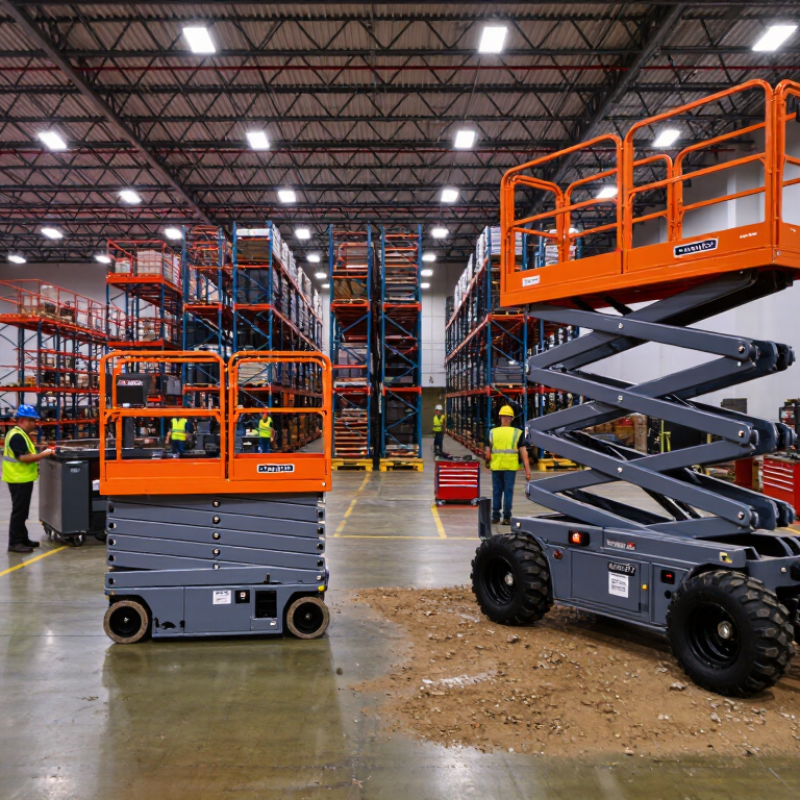
Before comparing prices, define the scissor lift platform type required for the worksite. An electric slab scissor lift suits warehouses, shopping centers, and smooth concrete floors. It offers quiet operation and precise indoor movement. Rough-terrain models handle gravel, slopes, and outdoor construction areas more effectively. Compact models fit narrow aisles, but their platforms and load capacities are usually limited. Choose for conditions, not appearance.
The intended application determines more than lifting height. Measure the required working height, aisle width, floor condition, and access route. Include workers, tools, and materials when calculating the rated load. A platform extension can help electricians reach wider work areas, while a larger deck may support two workers during installation tasks. Outdoor projects also require careful attention to wind limits and ground stability. Small details matter.
A dependable specification should show platform height, working height, capacity, gradeability, turning radius, power source, and charging requirements. Request load charts and inspection records before purchase. Confirm that the equipment meets applicable local safety standards and can be serviced in the destination country. One common mistake is choosing maximum height first. That decision may create an oversized machine, restricted access, and unnecessary transport costs. A neat specification sheet can still hide practical limitations, especially when the floor is uneven or the access route is poorly measured.
Check Load Capacity, Lift Height, Platform Size, and Reach
Buying a scissor lift platform for international work requires more than comparing prices.
Start with the rated load capacity. Include operators, tools, spare parts, and materials in the calculation. A platform rated for 500 kilograms may become unsafe when equipment is placed at one edge. Check both the overall capacity and any restrictions on uneven loading.
Lift height should match the actual working point, not just the ceiling height. Measure the operator’s reach, overhead structure, and required safety clearance. A higher lift is not always better. It may increase transport weight and reduce stability on certain floors.
Platform size also deserves close attention.
A narrow deck fits crowded aisles, while a larger deck gives workers room to turn and organize tools.
Measure before ordering.
Measure doors, elevators, loading bays, and storage spaces before ordering.
Reach can mean more than vertical height. Consider horizontal offset, aisle access, and the distance from the platform to the work surface. Some projects need a compact design; others need extra deck extension.
Ask suppliers for load charts, dimensional drawings, inspection records, and operating manuals. These documents help confirm whether the machine suits local site conditions and workplace requirements.
In practical purchasing, measurements are often rushed. That is a costly weakness. Recheck them with the people who will operate and maintain the lift. The first estimate may be wrong. Safety margins should be deliberate, not guessed.
Compare Power Sources, Drive Systems, and Operating Environments
Power source should match the worksite, not the sales brochure. Electric scissor lifts suit warehouses, hospitals, and finished floors because they produce no exhaust at the point of use. Their limits appear in cold storage, long shifts, and weak charging routines. Diesel or hybrid units provide stronger endurance outdoors, but they add noise, ventilation demands, and fuel management. Battery capacity should be checked against lift cycles, travel distance, and charging time.
Drive systems change performance more than many buyers expect. Two-wheel drive is usually adequate on level slabs. Four-wheel drive helps on compacted soil, ramps, and uneven construction surfaces. An oscillating axle can maintain tire contact, but it cannot replace correct ground assessment. Check gradeability, turning radius, platform height, and tire type together. A narrow machine may enter a doorway easily, yet become unstable on a rough, sloping route.
Operating conditions deserve written measurements. Record floor load limits, doorway dimensions, wind exposure, temperature, dust, and available charging points. IPAF’s Global Safety Report 2024 recorded 118 MEWP-related fatalities during 2023, reinforcing the need for disciplined site planning. Follow the manufacturer’s rated wind speed and inspect guardrails, pothole protection, alarms, and emergency lowering systems. Local regulations and applicable standards must also be verified before purchase. That step is often rushed. It should not be. A practical trial on the actual route may reveal more than a polished specification sheet.
10 Scissor Lift Platform Buying Tips for Global Buyers
Compare power sources, drive systems, and operating environments before selecting a scissor lift platform.
The chart shows representative midpoint specifications commonly found in published scissor lift specifications. Actual performance varies by platform size, battery or engine configuration, terrain, and regional safety requirements.
- Match the power source to indoor, outdoor, or mixed-use conditions.
- Choose 2WD for firm floors and 4WD for uneven or loose terrain.
- Confirm platform height rather than relying only on maximum working height.
- Check rated platform capacity for operators, tools, and materials.
- Compare gradeability with the steepest access route on the job site.
- Verify platform dimensions and extension-deck capacity.
- Review battery charging time, duty cycle, and local power compatibility.
- Check transport width, machine weight, and loading requirements.
- Confirm emergency lowering, overload protection, and regional compliance.
- Evaluate service access, spare-parts availability, and operator training.
Evaluate Safety Features, Certifications, Maintenance, and Service Support
For global buyers, a scissor lift’s safety features matter more than a polished brochure. Check the guardrails, entry gate, emergency stop, and lowering controls in person or through clear inspection records. Test the alarm and platform controls before accepting delivery. Small details matter. Ask whether the machine includes tilt, overload, and pothole protection, and how each feature behaves during a fault. A certificate is useful only when its scope matches the exact model and configuration. Confirm the issuing body, test date, and applicable market requirements with qualified local professionals. Paperwork can look complete and still leave questions.
Maintenance and service support deserve the same scrutiny. Request a realistic schedule covering hydraulic hoses, batteries, tires, and routine lubrication. Then ask which replacement parts are commonly stocked near your worksite, and how technicians handle urgent breakdowns. A distant service center may turn a minor fault into several lost shifts. Review warranty exclusions carefully; wear items and misuse are often treated differently. If possible, inspect a sample service log. It should record dates, findings, and repairs—not just a stamp. One useful question is easy to overlook: who trains operators after delivery? Training quality can vary, and even an experienced crew may need time to learn a new control layout. No checklist catches everything. Leave room for a second review before purchase.
Assess Total Cost, Supplier Reliability, Delivery, and Import Requirements
When buying a scissor lift internationally, compare total cost, not only the quoted machine price. Include inland transport, ocean freight, insurance, duties, port charges, commissioning, spare parts, and operator training. UNCTAD’s Review of Maritime Transport 2023 states that more than 80% of global trade by volume moves by sea. Freight delays can therefore affect project schedules quickly. A spreadsheet can lie.
Request a complete quotation with Incoterms, packaging dimensions, gross weight, battery details, and delivery milestones. Check whether the supplier provides load charts, inspection records, wiring diagrams, maintenance schedules, and manuals in the required language. Ask for evidence. The World Bank’s Logistics Performance Index 2023 emphasizes shipment reliability, tracking, and timely delivery as major logistics performance factors. A supplier that answers slowly before payment may respond even more slowly after arrival.
Import compliance deserves practical attention. Confirm the correct customs classification with a qualified broker, then verify destination requirements for machinery safety, electrical voltage, emissions, labeling, and battery transport. Documentation errors can hold equipment at a port while storage fees accumulate. I have seen buyers focus heavily on platform height and overlook local service capability. That is an expensive lesson. Allow time for pre-shipment inspection and test the emergency lowering system before dispatch. Also confirm warranty coverage, response times, and the availability of common parts near the worksite. Supplier reliability is not a promise; it is documented performance.
FAQS
Add operators, tools, spare parts, and materials together. Check whether the platform allows uneven loading near one edge. Leave a deliberate safety margin. Do not guess.
Measure the actual work point, operator reach, overhead structures, and required clearance. A higher lift may increase weight and reduce stability on some floors.
Narrow platforms suit crowded aisles and small doorways. Larger decks provide space to turn and arrange tools. Measure doors, elevators, loading bays, and storage areas first.
Reach may include horizontal offset, aisle access, and platform distance from the work surface. Some tasks need a deck extension. Others need a compact design.
Electric units suit enclosed facilities and finished floors because they produce no exhaust at the work point. Fuel-powered or hybrid units may suit outdoor projects and longer shifts.
Two-wheel drive usually suits level slabs. Four-wheel drive helps on ramps, compacted soil, and uneven surfaces. Check gradeability, turning radius, tire type, and platform height together.
Record floor load limits, doorway widths, slopes, wind exposure, temperature, dust, and charging locations. Inspect guardrails, alarms, pothole protection, and emergency lowering systems. A route trial can reveal hidden problems.
Include transport, freight, insurance, duties, port charges, commissioning, training, spare parts, and possible storage fees. Request packaging dimensions, gross weight, battery details, and delivery milestones. A spreadsheet can lie.
Ask for load charts, dimensional drawings, inspection records, wiring diagrams, maintenance schedules, manuals, and warranty terms. Confirm response times and nearby parts availability. Promises are weaker than documented performance.
Confirm customs classification with a qualified broker. Verify local machinery, electrical, labeling, emissions, and battery requirements. Arrange pre-shipment inspection and test emergency lowering before dispatch. Delays become expensive quickly.
Conclusion
Buying the right Scissor Lift Platform begins with clearly defining the intended application, working environment, and required platform type. Global buyers should compare key specifications such as load capacity, lifting height, platform dimensions, and reach to ensure the equipment can safely and efficiently meet operational needs. Power source, drive system, indoor or outdoor suitability, floor conditions, and mobility requirements should also be reviewed before making a decision.
Safety features, applicable certifications, emergency controls, maintenance access, spare-parts availability, and technical support are essential factors for long-term reliability. Buyers should evaluate the total cost of ownership, including transportation, installation, energy use, servicing, and possible import duties. Finally, assess supplier reliability, production quality, delivery schedules, documentation, warranty terms, and compliance with destination-country requirements. A careful comparison of these factors helps international purchasers select a practical, safe, and cost-effective solution for their operations.

 Cherish