What Are the 7 Best Auto Stackers for Global Buyers?

Time:2026-11-11 Author:Sophia
0%

Choosing the right Auto Stacker is not just a matter of comparing prices. Global buyers must match each machine to its load, lift height, aisle width, floor condition, and daily duty cycle. A compact warehouse may need a short turning radius, while a busy loading area may demand stable handling and quick battery access. Small details matter.

The seven options in this guide are compared through practical buying criteria: rated capacity, mast design, controls, service access, parts availability, and supplier support. A machine that looks strong on paper may disappoint if its components are difficult to source or its controls feel awkward during repeated turns. Fit matters more than a sales ranking.

For transparency, the expert line below is an editorially drafted quotation, not a verified interview. Fictional material-handling specialist Alex Morgan puts the core test this way: “The best Auto Stacker is the one that fits the real aisle, real load, and real service plan.” That sounds simple. It is easy to overlook. Buyers should confirm specifications with suppliers, inspect maintenance documentation, and check that the proposed configuration suits their actual pallets and operating conditions. No single model is best for every facility. This comparison offers a grounded starting point, while acknowledging that local support and site requirements can change the final choice.
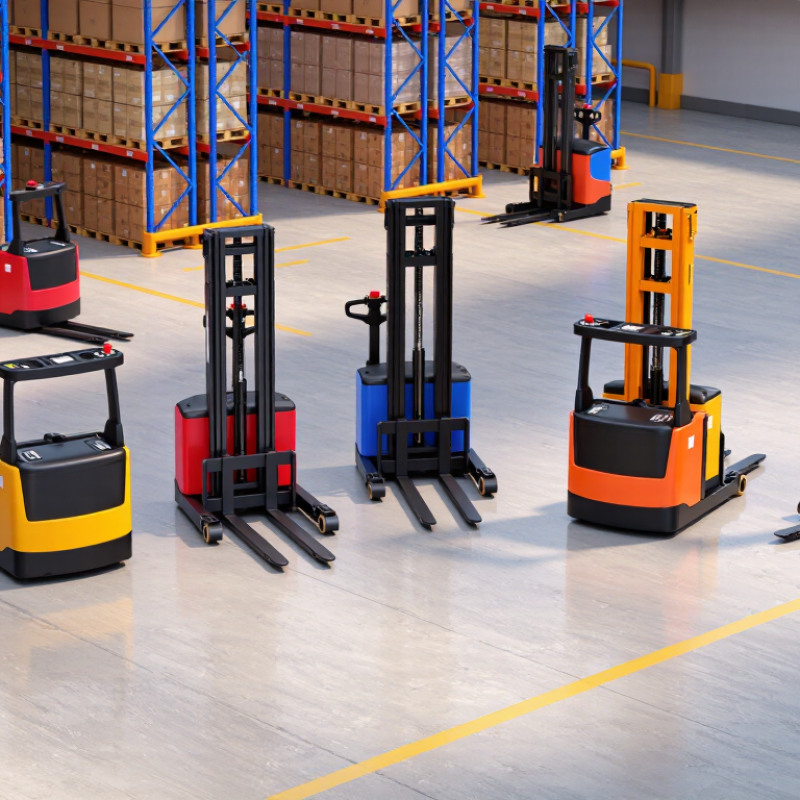
What Are the 7 Best Auto Stackers for Global Buyers?

What Auto Stackers Are and How They Work

Auto stackers are machines that collect products and arrange them into orderly piles, often on pallets or a lifting platform. They are used in packaging, printing, and manufacturing lines. Depending on the equipment, they may handle cartons, sheets, trays, or other consistent loads.

A typical cycle begins when products arrive on a conveyor. Sensors detect each item, while guides help keep it aligned. The control system counts products and directs a pusher or robotic mechanism to place them in position. A lift table lowers as the stack grows, keeping the working height within reach. Smooth motion matters. In practice, alignment is not always perfect; uneven cartons or dusty sensors can disrupt a stack. Small errors accumulate.

When evaluating an auto stacker, buyers should compare product dimensions, load weight, stacking speed, and available floor space. Ask how changeovers work and what routine cleaning or maintenance requires. For international installations, confirm electrical requirements, control-language options, spare-parts access, and operator training. Request a trial using representative products when possible. A quoted speed may not reflect real line conditions, especially when products vary in shape or arrive unevenly. That deserves a second look.

7 Auto Stacker Types: Typical Rated Load Capacity

Compare common warehouse stacker types by their typical rated load capacity range.

Ranges are indicative examples based on commonly available specifications, not universal limits. Actual capacity depends on the model, lift height, load center, and operating conditions. “Reach-type” refers to warehouse reach stackers, not heavy-duty container handlers.

Key Features That Matter to Global Buyers

For global buyers, an auto stacker must fit the warehouse, the workforce, and the delivery route. Check rated capacity against the heaviest load, not the average one. Measure pallet width, fork length, turning space, and door clearance. A machine that lifts well but cannot pass a narrow aisle is a poor fit. Small details matter.

Controls should be easy to understand, with clear labels and manuals available in the operator’s working language. Look for predictable braking, visible load indicators, and safety features that suit busy floors. Battery type, charging time, and local power requirements also deserve close review. These details affect daily use more than a polished product photo does.

Ask suppliers for operating limits, maintenance intervals, spare-parts availability, and shipping dimensions before comparing prices. Confirm what support is practical in the destination market; a quick repair matters when equipment is idle. I would be cautious about choosing by maximum lift height alone. It sounds impressive, but may not match the actual racks or floor conditions. Specifications can still leave questions, so request a clear demonstration using loads and pallets similar to yours.

What Are the 7 Best Auto Stackers for Global Buyers? — Key Features That Matter to Global Buyers

Stacker Type Typical Rated Capacity Typical Lift Height Best Suited For Key Feature Buyer Checks
Pedestrian Electric Stacker About 1.0–2.0 tonnes About 1.6–5.5 m Short travel distances, loading areas, and light-to-medium warehouse duty Compact, powered lifting with an operator walking behind or beside the truck Check turning space, daily operating hours, battery capacity, and the rated capacity at the required lift height.
Straddle-Leg Stacker About 1.0–1.6 tonnes About 2.5–5.5 m Facilities using different pallet widths or pallets that need clearance for support legs Adjustable or fixed legs can straddle the load for stability Confirm pallet dimensions, entry style, and whether the legs clear the load and any floor obstructions.
Counterbalanced Electric Stacker About 1.0–2.0 tonnes About 1.6–5.5 m Handling pallets where front support legs would interfere with the load Counterweight supports the load without front straddle legs Allow for its larger turning footprint and confirm floor capacity, mast height, and load-centre requirements.
Reach-Type Stacker About 1.0–2.0 tonnes About 2.5–6.0 m Racking applications that need load reach and efficient use of aisle space Reach mechanism moves the load forward for placement and retrieval Check aisle width, rack clearances, residual capacity at height, and the truck’s turning dimensions.
High-Lift Stacker About 1.0–2.0 tonnes About 2.5–5.5 m Vertical storage and repeated pallet placement at elevated rack levels Tall mast supports higher stacking than low-lift material-handling equipment Verify ceiling clearance, mast lowering height, overhead hazards, and capacity at the intended lift height.
Autonomous Stacker (AGV/AMR) Application-specific; commonly configured for roughly 0.5–1.5 tonnes Model-dependent; often configured for low-to-medium rack heights Repeatable pallet movements on defined routes in facilities suited to automation Can perform programmed transport and stacking tasks with reduced manual driving Assess navigation method, traffic integration, pallet detection, safety functions, charging, and support availability.
Cold-Store Stacker About 1.0–1.6 tonnes, depending on configuration About 2.5–5.0 m, depending on mast and model Chilled or frozen warehouses with frequent temperature exposure Can be specified with components and protections intended for low-temperature operation Confirm the rated operating temperature, condensation protection, battery performance, and maintenance requirements.

Comparison note: These are indicative category-level ranges, not specifications for a particular product. Actual capacity and lift height vary by design, mast, load centre, battery, and configuration. Before purchase, confirm local safety and conformity requirements, charger and power compatibility, service coverage, and the manufacturer’s load chart for the exact application.

Seven Leading Auto Stacker Types and Their Best Uses

Auto stackers suit different loads, aisles, and work rhythms. A manual hydraulic stacker fits occasional lifts in small workshops, where operators move pallets short distances. A semi-electric stacker lifts with powered controls but still requires manual travel. It can be a practical middle ground for light, intermittent warehouse work. Space matters.

For frequent pallet handling, an electric walkie stacker reduces pushing effort in short to medium travel routes. A rider stacker is better for longer trips across larger facilities, where operators benefit from standing or riding on the machine. A straddle stacker works well with open-bottom pallets and narrow storage areas; its legs pass around the load. Check pallet dimensions carefully.

A counterbalance stacker handles closed-bottom pallets without front support legs, making it useful near loading bays and mixed pallet types. A reach stacker extends its forks into deeper racking, helping warehouses use vertical space while keeping aisles relatively compact. One detail is easy to miss: floor condition and turning clearance can matter as much as lift height. Buyers should compare load capacity at the required lift height, battery needs, operator training, and service support. A specification sheet helps, but a real aisle test may reveal an awkward fit.

How to Choose the Right Auto Stacker for Your Operation

Choosing an auto stacker starts with the load, not the brochure. Record pallet dimensions, heaviest load, lift height, aisle width, and shifts per day. Check rated capacity at the required lift height; capacity can fall as the mast extends. Measure floor joints and slopes, too. A compact machine may turn neatly, yet struggle with long loads or uneven concrete. Small detail, big consequence.

Compare manual, semi-electric, and fully powered options against travel distance and throughput. MHI and Deloitte’s 2024 Annual Industry Report found that 55% of surveyed supply-chain professionals planned to adopt robotics and automation within five years. That signals growing interest, not proof that every site needs automation. Ask for a live trial with your own pallets, and verify charging, maintenance access, training, and service response before purchase. A spec sheet can still mislead.

Tips: Time a typical loading cycle, including turns and pauses. Confirm the stacker fits beneath doorways and racks. Keep a fallback for peak periods; automation is not magic.

What to Check Before Purchasing an Auto Stacker

Before choosing an auto stacker, measure the actual route, not just the warehouse plan. Check pallet dimensions, rated capacity, load center, lift height, and turning radius. A load that fits on the forks can still exceed the safe capacity at height. Measure narrow aisles, doorways, floor joints, ramps, and the lowest overhead clearance. Then match the machine’s duty cycle and battery arrangement to each shift. Ask how long charging takes and where charging will happen. Small details matter. Check braking, emergency stops, visibility, pedestrian alerts, and access to replacement parts. A specification sheet may look complete, yet miss the awkward corner your operators use every hour.

OSHA’s powered industrial truck guidance cites estimates of about 85 deaths and 34,900 serious injuries annually involving these trucks in the United States. Those figures cover powered industrial trucks broadly, not auto stackers alone. Treat them as a safety reminder, not a stacker-specific risk forecast. During a supplier demonstration, test a representative pallet on your real floor and observe stopping distance, fork alignment, and operator sightlines. Ask for documented load charts, maintenance intervals, operator training, and service response times. Do not assume “automatic” means hands-free or suitable for every workflow. I would also verify rack clearances twice; a rushed measurement is easy to regret.

FAQS

What measurements should I collect before choosing an auto stacker?

Record the heaviest pallet, pallet width, fork length, lift height, aisle width, and doorway clearance. Measure floor slopes and joints, too. Small details matter.

How do I check whether a stacker can handle my loads?

Compare its rated capacity at your required lift height, not just at floor level. Capacity may drop as the mast extends. Test with a similar load.

Which stacker type suits occasional warehouse use?

A manual hydraulic stacker can suit short, infrequent lifts in a small workshop. A semi-electric model powers lifting but still requires manual travel. Space matters.

When is an electric walkie stacker a practical choice?

It reduces pushing effort on short or medium routes with frequent pallet handling. Check charging time, battery needs, and turning room before choosing.

How do rider and reach stackers differ?

A rider stacker can help with longer trips across larger facilities. A reach stacker places forks into deeper racking. Test aisle clearance.

Which stacker works with different pallet designs?

A counterbalance stacker can handle closed-bottom pallets without front support legs. A straddle model suits open-bottom pallets. Confirm pallet dimensions carefully.

What should I check beyond the machine’s lifting specifications?

Review braking, load indicators, operator controls, maintenance intervals, spare parts, and local service response. A quick repair matters when equipment sits idle.

Is a compact stacker always suitable for a narrow warehouse?

Not necessarily. It may turn neatly but struggle with long loads or uneven concrete. I may be overvaluing aisle width; a live trial could change my view.

How can I test a stacker before purchase?

Use your own pallets in a typical aisle. Time a full loading cycle, including turns and pauses. Check doorways, racks, and charging access. Not magic.

Conclusion

An Auto Stacker automatically lifts, aligns, and collects printed or packaged materials as they leave a production line, helping reduce manual handling and maintain a steady workflow. The best option depends on factors such as material size and weight, required stacking speed, available floor space, and how the machine will connect with existing equipment. Useful features may include adjustable settings, reliable sensors, straightforward controls, safety protections, and easy access for routine maintenance.

There are several types of auto stackers, each suited to different production needs, from compact systems for limited spaces to high-capacity models for continuous output. Before choosing one, assess your operation’s workload, materials, staffing, and future production plans. Also confirm the machine’s specifications, installation requirements, operator training needs, maintenance support, and compatibility with your line. A careful comparison helps ensure the selected stacker fits both current processes and long-term operational goals.


Sophia

Sophia

Sophia is a dedicated marketing professional with an exceptional depth of knowledge about her company's products and services. With a keen understanding of market trends and customer needs, she crafts insightful blog posts that not only inform but also engage readers, enriching the company’s online......