What Is the Best Spraying Line for Global Buyers?

Time:2026-10-28 Author:Madeline
0%

Choosing the best Spraying Line is not a simple equipment purchase. It is a production decision involving finish quality, throughput, energy use, maintenance, and compliance.

Grand View Research valued the global industrial coatings market at approximately USD 110 billion in 2023. Its outlook also indicates steady growth through 2030. This expansion is increasing demand for reliable automated coating systems. Meanwhile, MarketsandMarkets reports continued growth in the powder coatings sector, driven by automotive, appliances, construction, and general industrial manufacturing. These figures suggest strong opportunities, but they do not identify one universal solution.

The right Spraying Line depends on the product surface, coating chemistry, target film thickness, and factory volume. A metal cabinet line may require pretreatment, drying, robotic spraying, curing, and inspection. A smaller furniture plant may need flexible color changes and simpler airflow control. Practical experience matters here. A line that performs well in one factory may waste material in another.

Look beyond the catalog.

ISO 12944 provides useful guidance for protective paint systems and corrosion environments. Buyers should also review local emissions, worker-safety, electrical, and waste-management requirements before installation. These requirements differ between markets and can affect booth design, filtration, ventilation, and documentation.

Some suppliers emphasize robot speed alone. That can be misleading. Transfer efficiency, overspray recovery, downtime, and operator training often influence total cost more strongly. Energy performance also deserves closer review. The U.S. Department of Energy consistently identifies industrial process efficiency as an important cost-control area, although actual savings depend on factory conditions.

There is no perfect line. Careful testing, measurable specifications, and realistic after-sales support usually produce the safer investment.
What Is the Best Spraying Line for Global Buyers?

What Is a Spraying Line and How Does It Work?

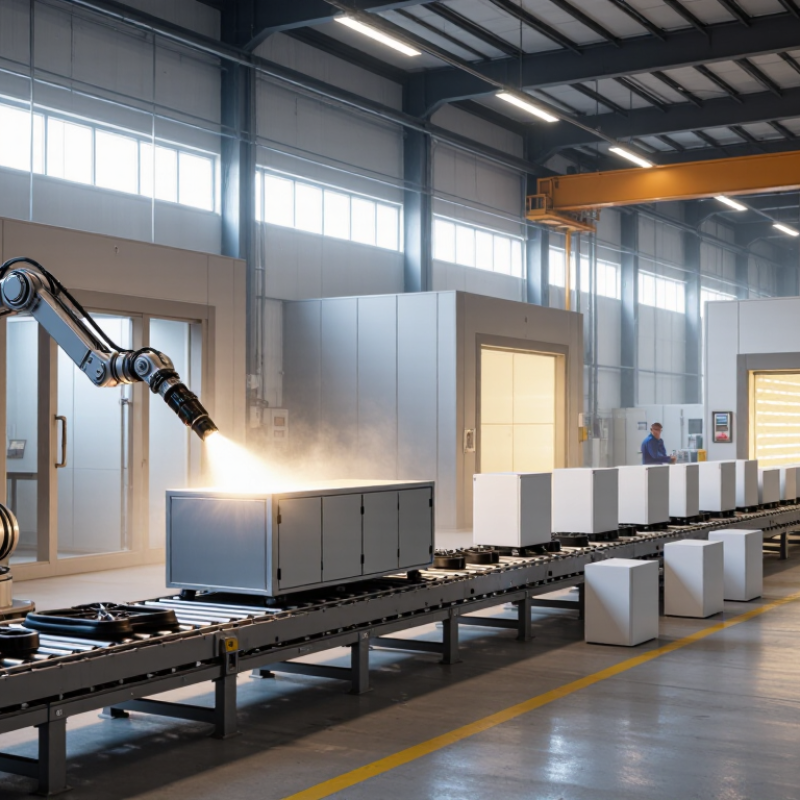
A spraying line is an integrated production system for applying liquid or powder coatings to products. It usually combines loading, surface preparation, spraying, drying, curing, and unloading equipment. The workpiece moves through each stage on a conveyor. This creates a repeatable coating process.

The process looks simple. However, every stage affects the final finish. Pretreatment removes oil, dust, and oxidation from the surface. Spray guns then distribute coating material through controlled air pressure or electrostatic force. A drying oven removes moisture, while a curing oven hardens the coating at a set temperature. Sensors monitor speed, temperature, and airflow. Filters capture overspray and help protect workers and nearby equipment.

For global buyers, the best spraying line should match the product size, coating type, output target, and available factory space. Electrical voltage, gas supply, ventilation, and local safety requirements also need careful checking. Technical drawings, maintenance schedules, spare-parts lists, and operator training improve long-term reliability. In practice, no line is perfect. A faster conveyor may reduce coating time but create uneven coverage. A larger oven may improve curing but increase energy use. Buyers should request sample testing with real workpieces before ordering. Coating thickness, adhesion, color consistency, and material consumption provide more useful evidence than impressive specifications. Small details matter. A practical line is easier to operate, inspect, and adjust when production conditions change.

What Is the Best Spraying Line for Global Buyers?

What Is a Spraying Line and How Does It Work?

A spraying line is an integrated production system that moves parts through surface preparation, drying, spraying, curing, and cooling. For global buyers, the best line should match the coating material, product size, required finish, energy source, conveyor speed, and local safety standards.

How to read the chart: The ranges show representative operating windows commonly used in industrial powder-coating lines. Pretreatment removes oil and contaminants, the dry-off oven removes moisture, the spray booth applies the coating, and the curing oven bonds the powder to the part. Actual settings depend on the powder chemistry, substrate, coating thickness, and required finish. Cure temperature refers to the part-metal temperature, not only the oven air temperature.

Which Spraying Line Types Serve Different Industrial Applications?

What Is the Best Spraying Line for Global Buyers?

Which Spraying Line Types Serve Different Industrial Applications?

Industrial spraying lines are not universal machines. Each type suits a different production challenge. Airless spraying lines handle thick coatings and large metal surfaces efficiently. They are common in structural steel, agricultural equipment, and heavy machinery production. Electrostatic spraying lines improve coating transfer on conductive parts. This reduces overspray when operators control grounding and spray distance carefully. Powder coating lines suit metal cabinets, frames, appliances, and other durable products. They combine automatic spray booths with curing ovens and recovery systems.

Liquid coating lines offer greater flexibility for plastics, wood, and assembled components. They can apply primers, color coats, and protective finishes with adjustable spray guns. Dip coating lines work well for small parts requiring full surface coverage. Their tanks need careful monitoring because viscosity and contamination can change quickly. For high-volume factories, robotic lines provide stable movement and repeatable film thickness. Manual stations still matter for complex shapes and small production batches.

Selection should begin with the substrate, coating chemistry, target film thickness, and daily output. A factory should also review ventilation, oven temperature control, filtration, and wastewater handling. In real projects, the cheapest line can create higher costs through rework and maintenance. Pilot testing remains essential. A panel may look uniform, yet hidden edges can show poor coverage. Even experienced teams sometimes underestimate color-change time and cleaning labor. That mistake deserves attention before final equipment specifications are approved.

How Should Global Buyers Compare Spraying Line Performance?

Global buyers should compare spraying line performance with measured production data, not impressive catalog claims.

Start with output per hour, spray uniformity, and material transfer efficiency. These figures reveal how the line performs beyond a factory demonstration.

Ask for test results using a material similar to your own. Check coating thickness at the center, edges, and difficult corners. A reliable line should keep variation within a clearly stated range.

Confirm how operators adjust pressure, nozzle distance, conveyor speed, and curing time. Small controls matter.

Look closely at uptime.

Review cleaning time, filter replacement intervals, and access to pumps and nozzles. During a site visit, I would watch a full shift, not only a short trial. Listen for unstable pump noise. Observe overspray around the booth. These details often expose future maintenance costs.

Energy use also deserves comparison.

Request power consumption per finished unit, not only motor ratings. Check whether the system supports different product sizes without lengthy changeovers.

Global buyers should examine manuals, training materials, spare-parts plans, and remote service response times. Clear documents build trust.

No line wins every test.

A faster line may create more waste or require more skilled operators. I have seen buyers focus on speed, then struggle with inconsistent coverage after installation. That mistake is easy to repeat. Independent testing is safer, although it adds time and expense. Ask for transparent assumptions, repeatable measurements, and realistic operating conditions before making a decision.

What Materials and Features Determine Spraying Line Quality?

What Is the Best Spraying Line for Global Buyers?

Spraying line quality begins with material selection, not software. In factory audits, stainless steel contact parts resist corrosion and reduce contamination risks. 304 stainless steel suits most applications. 316 stainless steel performs better in humid or chemical environments. Carbon steel frames remain practical, but poor coating protection causes early rust.

Hose material also matters. PTFE handles aggressive chemicals and high temperatures. Flexible polyurethane hoses support powder or liquid transport, but they need regular inspection. Pumps should deliver stable pressure without excessive vibration. Spray guns require accurate voltage, current, and nozzle control. Grounding is critical. Small grounding failures can create uneven coverage and rework.

According to Fortune Business Insights, the global powder coatings market was valued at about 13.09 billion dollars in 2023. It may reach 20.56 billion dollars by 2032, with a projected 5.1% CAGR. This growth increases demand for efficient recovery systems and consistent film thickness. A 2024 Grand View Research report also identifies automation and low-emission coating processes as major market drivers. However, automation alone cannot repair weak airflow or poor pretreatment.

PLC
Records

Look inside the booth. Airflow should remain balanced around the workpiece. Filters must be easy to replace. Recovery ducts should avoid dead corners. PLC records help trace pressure, temperature, and faults. Yet data can mislead when sensors are poorly calibrated. A high-specification line is not automatically a reliable line. Practical testing with real parts remains necessary.

How Can Buyers Select Reliable Spraying Line Suppliers?

What Is the Best Spraying Line for Global Buyers?

Reliable spraying line suppliers do more than offer attractive prices. They explain capacity, coating thickness, energy use, and maintenance requirements clearly. Ask for a complete process drawing, not only product photos. The drawing should show pretreatment, drying, spraying, curing, conveyor movement, and ventilation. Request material specifications for critical parts. This reveals whether the proposal matches your production environment.

A dependable supplier can provide factory references, test records, and measurable acceptance standards. Ask how the supplier checks film thickness, color consistency, temperature control, and line speed. A sample test using your actual workpieces is valuable. Watch the operators, powder recovery, and curing results. Small details matter. Check electrical documentation, safety protection, spare-part availability, and remote support. Suppliers should also explain installation training and response times after delivery.

Do not choose from a quotation alone. Compare the total operating cost over several years. A cheaper line may require more labor, longer downtime, or frequent part replacement. Visit an operating site when possible, even if the visit complicates your schedule. Speak with production managers, not only sales staff. No supplier is perfect, and some promises will remain uncertain before commissioning. That uncertainty should be recorded in the contract, with clear testing procedures and responsibility for corrections. A careful supplier welcomes difficult questions instead of avoiding them.

FAQS

What is a spraying line?

A spraying line is an integrated system for coating products. Products move on a conveyor. The line may include loading, pretreatment, spraying, drying, curing, and unloading. Each stage influences the final surface.

How does a spraying line work?

Pretreatment removes oil, dust, and oxidation from the workpiece. Spray guns apply liquid or powder coating. A drying oven removes moisture. A curing oven hardens the coating at a controlled temperature. Sensors monitor speed, temperature, and airflow.

Why is pretreatment important?

Pretreatment helps the coating adhere to the surface. It also reduces contamination and uneven coverage. Poor cleaning may cause peeling, bubbles, or weak adhesion. A clean surface matters greatly.

What materials affect spraying line quality?

Stainless steel contact parts resist corrosion and reduce contamination. Grade 304 suits many normal applications. Grade 316 is stronger in humid or chemical environments. Coated carbon steel can remain practical. However, weak protection may lead to early rust.

What should buyers check inside the spray booth?

Airflow should remain balanced around each workpiece. Filters need easy replacement access. Recovery ducts should avoid dead corners. Grounding must be reliable. Small grounding failures can create uneven coating.

How should buyers select a reliable supplier?

Request a complete process drawing, not only attractive photographs. The drawing should show pretreatment, ovens, spraying, conveyors, and ventilation. Ask for material specifications and maintenance requirements. Factory references and test records provide useful evidence. Sales promises alone are not enough.

Should buyers test the line before ordering?

Yes, sample testing with real workpieces is strongly recommended. Check coating thickness, adhesion, color consistency, and material consumption. Observe curing results and powder recovery. Real parts reveal problems that specifications may hide. Testing can still miss future production changes.

How can buyers compare total operating costs?

Compare energy use, labor, spare parts, maintenance, and downtime. A cheaper line may require more frequent repairs. A larger oven may improve curing but consume more energy. A faster conveyor may reduce coating time but cause uneven coverage. The best option is rarely the fastest one.

What documents and support should a supplier provide?

Request electrical drawings, safety information, spare-parts lists, and maintenance schedules. Operator training improves daily reliability. Remote support can reduce troubleshooting delays. Contracts should define acceptance tests and correction responsibilities. No proposal is perfect. Some assumptions may fail.

Conclusion

Choosing the best Spraying Line requires more than comparing price or output alone. A spraying line is an integrated system that prepares, transfers, applies, and cures coatings or other materials on industrial products. Different configurations are designed for applications such as metal finishing, furniture production, automotive components, construction materials, and specialized surface treatment. Buyers should compare spraying accuracy, production speed, coating consistency, transfer efficiency, energy use, automation level, maintenance requirements, and compatibility with their existing workflow.

Quality is strongly influenced by the materials and engineering used in pumps, spray guns, nozzles, conveyors, control systems, and protective components. Reliable suppliers should provide clear technical specifications, stable quality control, installation guidance, operator training, spare-parts support, and responsive after-sales service. Global buyers should also evaluate safety features, environmental performance, certifications, delivery capability, customization options, and total operating cost. By assessing both equipment performance and supplier reliability, buyers can select a durable Spraying Line that supports consistent production and long-term operational value.


Madeline

Madeline

Madeline is a dedicated marketing professional with a wealth of expertise in our company's core offerings. With a keen understanding of the industry, she brings a unique perspective to her role, consistently delivering high-quality content that highlights the superior aspects of our products. As......