A workshop lift changes more than the view beneath a car. It affects access, workflow, storage, and safety. Yet the right Car Garage Lift depends on the vehicles you service, your ceiling height, available floor space, and the slab’s condition. A compact scissor lift may suit quick inspections, while a two-post model can provide broad underbody access. A four-post lift may be more useful for storage or alignment work. The differences are practical, not merely visual.
Demand for skilled service work helps explain why choosing equipment carefully matters. The U.S. Bureau of Labor Statistics projects 4% employment growth for automotive service technicians and mechanics from 2023 to 2033, with about 67,800 openings each year. These figures do not measure lift sales, but they point to ongoing demand for vehicle maintenance. Safety deserves equal attention. The Automotive Lift Institute (ALI) provides guidance on lift selection, installation, operation, and inspection. A lift’s rated capacity alone cannot tell you whether it suits your shop. Floor condition, vehicle weight distribution, and service routine matter too. Small details matter.
This guide compares ten common types, including portable, low-rise, mid-rise, in-ground, and parking lifts. Some categories overlap, and product labels can be confusing. That part deserves a closer look. Use the comparisons to identify what each design can do, where it may fall short, and which questions to ask before purchase. The best choice is not always the tallest or strongest one. It is the lift that fits the work, the space, and the people using it every day.
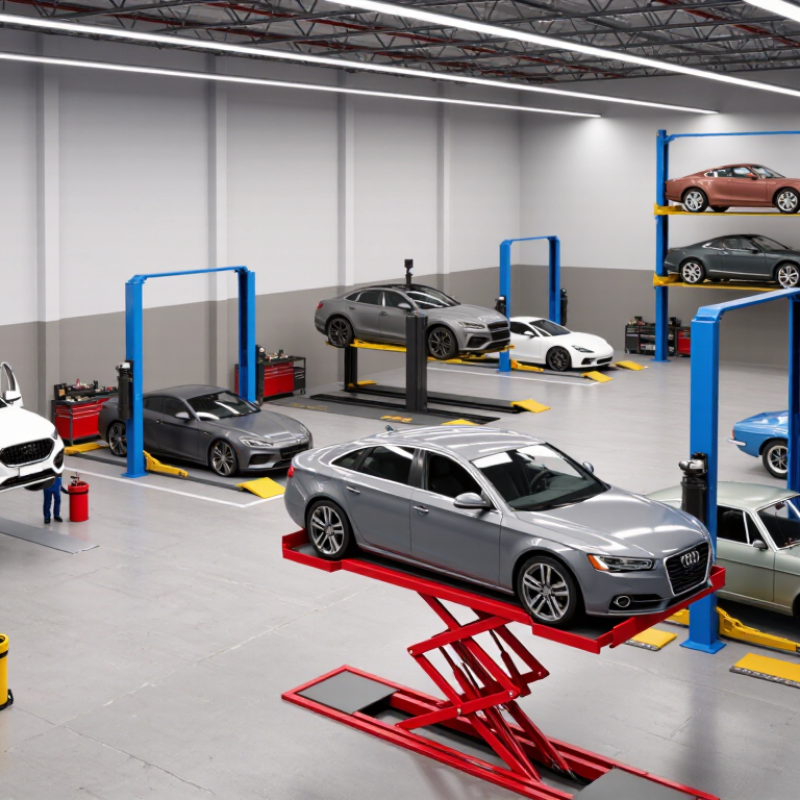
Automotive garage lifts do more than move a vehicle upward. They transfer its weight through contact points into the floor or a recessed structure. On a two-post lift, adjustable arms meet approved lifting points; a four-post lift supports the tires on runways. Scissor and in-ground designs use different structures, but the same principle applies: stable contact and balanced loading matter.
A typical hydraulic lift raises the vehicle, while mechanical safety locks provide support during work. Operators should raise the vehicle only a short distance first, pause, and check that the arms or runways remain correctly positioned. Then raise it high enough to engage the locks and lower it onto them. Small checks matter. A misplaced arm can shift the load; uneven flooring can complicate stability. The exact procedure depends on the lift’s manual and the vehicle’s lifting-point guidance.
The U.S. Bureau of Labor Statistics counted about 804,000 automotive service technicians and mechanics in 2023, a reminder of how many workers may encounter lifting equipment (Occupational Outlook Handbook, 2024). The Automotive Lift Institute’s guidance emphasizes proper installation, training, and inspection; its ANSI/ALI ALOIM standard calls for periodic inspection at least annually by a qualified lift inspector. That schedule is a useful baseline, not a reason to ignore unusual noises, damaged locks, or shifting during operation. I still find the quietest warning easy to overlook: a lift can appear steady before its locks are carrying the load.
What Are the Top 10 Types of Car Garage Lifts?
The Main Designs Used in Car Garage Lifts
Car garage lifts differ mainly in how they support a vehicle and use floor space. Two-post lifts hold cars by the frame, leaving the wheels free for many repair tasks. Four-post lifts support the tires on runways and often suit storage or routine service. Single-post lifts need less floor space, but their capacity and access vary by design. Scissor lifts rise from a compact, crossed-frame mechanism. Low-profile models can fit beneath some vehicles.
Other common designs include portable lifts, in-ground lifts, mobile-column lifts, parallelogram lifts, parking stackers, and alignment lifts. Portable units can be moved or stored, though setup still needs care. In-ground systems keep much of the structure below the floor. Mobile columns raise vehicles at their wheels, while parallelogram lifts move platforms in a parallel path. Parking stackers create a second parking level. Alignment lifts provide runways and access for wheel-measurement equipment.
The right choice depends on the work, vehicle weight, ceiling height, and floor construction. Check the lift’s rated capacity and required clearances against the vehicles you actually service. A thick, sound concrete floor matters. So does access to the vehicle’s lifting points. Some categories overlap; an alignment lift, for example, may use a four-post or scissor design. No single layout fits every garage, and a tidy floor plan can still feel cramped once a vehicle is raised.
| Lift Type | Main Design | Typical Capacity | Common Uses | Key Advantages | Important Considerations |
|---|---|---|---|---|---|
| Two-Post Lift | Two upright columns support the vehicle with adjustable arms positioned beneath approved lifting points. | About 7,000–12,000 lb | General repairs, inspections, brake work, and underbody service. | Provides broad access beneath the vehicle and uses less floor space than many four-post designs. | Requires suitable concrete, careful arm placement, and adequate ceiling height. |
| Four-Post Lift | Four columns support two runways that carry the vehicle’s tires. | About 8,000–18,000 lb | Storage, maintenance, and vehicle servicing; alignment versions may include turn plates and slip plates. | Stable drive-on platform; often convenient for storing one vehicle above another. | Runways can restrict access to wheels unless rolling jacks or other accessories are used. |
| Scissor Lift | Crossed steel arms expand beneath a platform or between two runways to raise the vehicle. | About 6,000–12,000 lb | General service, tire work, and alignment when configured with suitable platforms. | Can provide a clear working area around the vehicle and is available in several lift heights. | The scissor mechanism may obstruct some underbody areas; installation and floor requirements vary by design. |
| Low-Rise Lift | A compact platform or pair of lifting units raises a vehicle a short distance from the floor. | About 6,000–8,000 lb | Wheel, tire, brake, and lower-body work in garages with limited ceiling height. | Compact footprint and relatively low minimum height make it suitable for lower-clearance vehicles. | Provides less under-vehicle working height than full-rise designs. |
| Mid-Rise Lift | A portable or fixed platform system raises the vehicle to a moderate working height. | About 6,000–9,000 lb | Wheel service, detailing, body work, and general repairs where a full-rise lift is unnecessary. | Balances useful access with moderate ceiling and space requirements. | Does not usually provide the same standing room beneath a vehicle as a full-rise lift. |
| In-Ground Lift | Hydraulic or electromechanical lifting units are installed in pits below the floor, with lifting arms or adaptors rising from them. | About 7,000–18,000 lb | Professional service bays and garages designed for permanent lift installation. | Leaves much of the floor clear when lowered and can offer flexible access around the vehicle. | Typically involves substantial installation work; pit drainage, corrosion protection, and maintenance access are important. |
| Single-Post Lift | One central column supports a platform or lifting arms, depending on the design. | About 6,000–8,000 lb | Space-conscious vehicle service and storage applications. | Can leave more open floor space around the vehicle than multi-column designs. | Capacity, stability, and vehicle compatibility depend strongly on the specific design and installation. |
| Portable Column Lift | A coordinated set of mobile columns engages the wheels and raises the vehicle at multiple points. | Often about 14,000–18,000 lb per coordinated set; configurations vary | Commercial garages, fleet shops, and work on heavier vehicles. | Columns can be moved or repositioned when not in use and can accommodate a range of wheelbases. | All columns must be correctly positioned and operated as a matched, synchronized system. |
| Parallelogram Lift | Linked arms move the runways in a parallel path as the platform rises. | About 12,000–30,000 lb, depending on model | Heavy-duty repair bays, commercial vehicles, and some alignment applications. | Provides a drive-on platform and is available in high-capacity configurations. | Requires sufficient floor space for the platform’s movement and careful consideration of installation requirements. |
| Parking Stacker Lift | A raised platform stores one vehicle above another; designs may use posts, runways, or a scissor mechanism. | Commonly about 6,000–9,000 lb per platform, depending on design | Residential garages, vehicle storage, and facilities that need to increase parking capacity. | Uses vertical space to create an additional parking position within the same footprint. | Vehicle height, garage clearance, platform loading, and safe access must be checked before installation. |
Note: Capacity figures are typical illustrative ranges, not universal specifications. Actual capacity, lifting height, vehicle compatibility, floor requirements, and installation needs vary by lift model and configuration. Always follow the lift’s rated capacity and installation instructions.
What Are the Top 10 Types of Car Garage Lifts?
Ten lift designs suit different vehicles, floor plans, and repair tasks. Two-post lifts leave the wheels accessible for brake and suspension work. Four-post lifts support tires on runways, making them useful for storage and routine servicing. Scissor lifts rise from beneath the vehicle; low-rise models suit tire changes, while full-rise versions provide underbody access. Parallelogram lifts move the vehicle vertically on long platforms, often in high-throughput shops. In-ground lifts keep equipment below floor level, but installation and maintenance need careful planning.
Mobile column lifts raise heavy vehicles, such as buses, by their wheels. Portable mid-rise lifts work well for wheel and body repairs where headroom is limited. Portable low-rise lifts offer quick access for detailing or tire service. Alignment lifts use level runways and turnplates for wheel-angle adjustments. Parking lifts stack cars vertically when floor space is scarce. Space matters. The wrong design can obstruct daily work.
Tips: Check vehicle weight, lift points, ceiling height, and floor condition before choosing. ALI’s ANSI/ALI ALOIM-2020 standard calls for periodic lift inspections, including at least one inspection each year by qualified personnel. Treat that interval as a minimum, not a substitute for checking cables, locks, and contact pads during routine use. A spec sheet cannot capture every awkward vehicle or crowded bay; confirm fit with a qualified installer.
Ten types of garage lifts and their typical uses
How to read this chart: Bars show approximate rated-capacity ranges in pounds. Actual capacities vary by lift design and model; always check the lift’s rating and your vehicle’s weight.
Car lifts differ less by appearance than by how they carry weight and fit a working bay. Two-post lifts support vehicles at designated frame points, while four-post lifts carry the tires and often need more floor length. Scissor lifts raise vehicles from beneath the chassis; single-post lifts use one central support.
In-ground lifts hide much of their mechanism below the floor, but require substantial construction work. Portable lifts can be moved between suitable locations, though their capacity and lifting height may be limited.
Mid-rise lifts suit many tire and brake jobs but may not provide full standing clearance. Low-rise lifts are compact, yet offer only modest access underneath. Parking stackers prioritize storage and need enough ceiling height for a second vehicle.
Mobile column lifts use paired or grouped columns, so operators must plan for balanced placement and coordinated operation.
Capacity is not just a number on a label. Check the vehicle’s weight, lifting-point requirements, and load distribution. Check the slab. A neat floor plan can still miss door swing or vehicle approach space.
Installation needs vary sharply. Some portable units need little permanent work, while anchored lifts require a suitable concrete slab and precise positioning. In-ground systems can involve excavation and drainage considerations.
Measure ceiling height, bay width, and clearance around open doors before choosing. Have a qualified installer verify the floor and setup against the lift’s instructions. Small oversights happen; a few extra inches can matter.
Car garage lifts need type-specific checks, not just a quick look at the hydraulic unit. Two-post lifts require secure anchors, correctly positioned arms, and working locks. Four-post lifts need inspected cables, runway locks, and stable wheel placement. Scissor lifts have pinch points; check their guards and watch for hydraulic leaks. Portable-column lifts should move evenly, with each column’s wheels locked before lifting.
In-ground lifts need regular checks for corrosion, seals, and fluid leaks. Parallelogram lifts rely on sound pivots and clear guards. Single-post lifts need a stable base and carefully balanced loads. Parking lifts require functioning safety supports and enough clearance above and below. Motorcycle lifts need a secure wheel clamp and a steady platform. Alignment lifts should have clean turnplates and properly maintained slip plates. Wear can be subtle. A lift that sounds different deserves attention.
Tips: Before raising a vehicle, check its weight against the lift’s rated capacity and use the specified lifting points. Keep people clear, engage mechanical locks, and never work beneath a vehicle supported only by hydraulics. Follow the service schedule and keep inspection records. A checklist helps, but it can miss a small change in movement; pause and investigate when something feels off.
Common designs include two-post, four-post, scissor, single-post, and in-ground lifts. Portable lifts, mobile columns, parallelogram lifts, parking stackers, and alignment lifts also serve specific needs.
A two-post lift supports the vehicle by its frame, leaving the wheels accessible for brake and suspension work. A four-post lift supports the tires on runways, which can suit storage and routine servicing.
Portable mid-rise and low-rise lifts can suit garages with limited headroom. Low-profile scissor lifts may fit beneath some vehicles. Measure first; even a few inches can matter.
Parking lifts stack vehicles vertically when floor space is scarce. Alignment lifts have level runways and turnplates for wheel-angle adjustments. They may use different underlying lift designs.
Check vehicle weight, lifting points, ceiling height, and floor condition. Confirm the lift’s rated capacity and required clearances. A busy bay can feel cramped once a car is raised.
Position the arms or runways correctly, clear people from the area, and engage mechanical locks. Use the specified lifting points. Never work beneath a vehicle supported only by hydraulics.
Check cables and locks on four-post lifts, anchors and arms on two-post lifts, and guards and hydraulic lines on scissor lifts. Look for leaks, corrosion, or uneven movement on other designs.
Follow the lift’s service schedule and arrange periodic inspections by qualified personnel. Keep records, and investigate new noises or changes in movement. Checklists help, but they can miss subtle wear.
A Car Garage Lift raises a vehicle by applying controlled force through arms, platforms, or columns, then holds it securely at a working height. Common designs include two-post and four-post lifts, scissor lifts, portable lifts, in-ground lifts, parallelogram lifts, mobile-column lifts, low-rise lifts, mid-rise lifts, alignment lifts, and parking lifts. Each type suits different tasks, from wheel and underbody repairs to vehicle storage, and differs in how it contacts the vehicle and distributes its weight.
Choosing among these ten types depends on vehicle weight, lift capacity, ceiling height, floor condition, available space, and installation needs. Some models require permanent mounting or more room, while portable or low-rise designs may suit compact workshops. Safe operation also depends on correctly positioned lifting points, balanced loading, regular inspections, and maintenance of mechanical and hydraulic parts. Understanding these differences helps owners select a lift that fits their workspace and intended use while supporting reliable, careful vehicle servicing.

Cherish