Top 10 Car Parking Elevator Types for Global Buyers

Time:2026-09-14 Author:Ethan
0%

Choosing the right Car Parking Elevator is not a simple matter of comparing prices. Global buyers must examine vehicle dimensions, traffic volume, building structure, climate, maintenance access, and local safety requirements. A compact two-post system may suit a small dealership, while a hydraulic or puzzle system can serve a crowded urban development. Each option solves a different problem.

Dr. Albert So, a recognized elevator-safety researcher, states, “Safety must remain the first consideration in elevator design.” This principle should guide every comparison in this article. A reliable system needs controlled movement, emergency lowering, accurate platform positioning, and clear operator instructions. Buyers should also inspect the supplier’s testing records, installation experience, spare-parts support, and training process. A low purchase price can become expensive when sensors fail, drainage is poor, or service technicians are unavailable.

Real sites reveal details that brochures often hide. A rainy coastal garage needs corrosion-resistant components. A luxury apartment project may require quiet operation and discreet finishes. A logistics facility may prioritize fast cycle times over appearance. No ranking fits every site. That is the uncomfortable part.

The ten Car Parking Elevator types below are therefore compared by practical suitability, not marketing claims alone. Readers should question capacity figures, loading assumptions, and promised delivery periods. Even a well-designed system can perform poorly when the ramp is narrow or drivers ignore alignment marks. The best choice is not always the newest model. It is the system that matches daily use, verified engineering, responsible installation, and long-term maintenance reality.
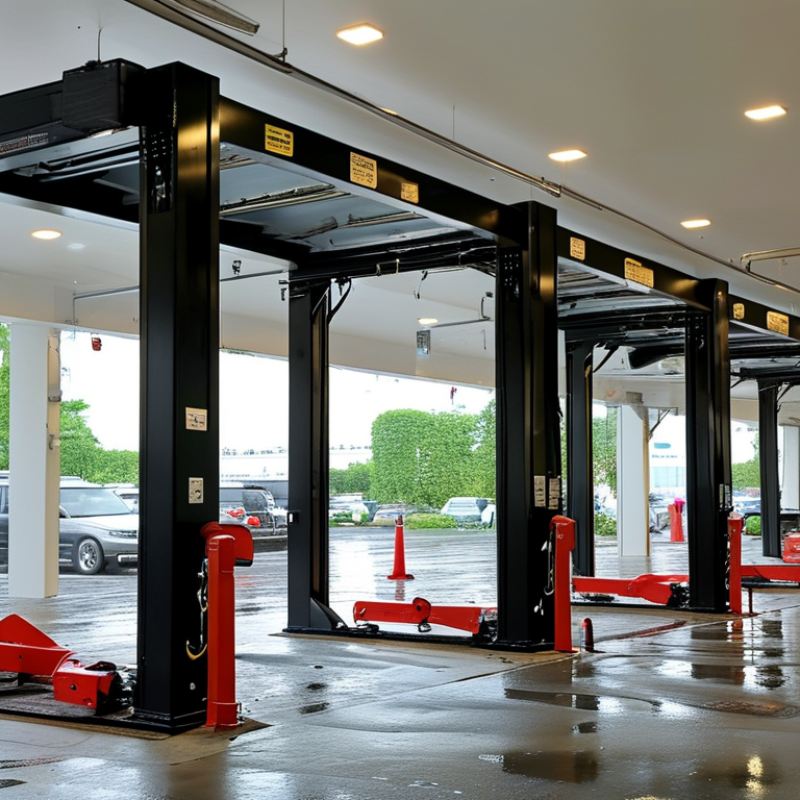
Top 10 Car Parking Elevator Types for Global Buyers

What Is a Car Parking Elevator and How Does It Work?

A car parking elevator is a powered platform that moves vehicles between parking levels. It saves floor space in buildings, garages, and compact urban sites. Unlike a passenger lift, it is designed around wheel loads, vehicle length, clearance, and precise positioning. Common types include two-post, four-post, scissor, puzzle, rotary, and tower systems. The right type depends on traffic volume, available height, vehicle weight, and site layout. It is not simply a taller parking space.

A driver stops on the platform. Sensors confirm the vehicle position and door status. The control system checks weight, clearance, and safety locks before movement begins. Hydraulic cylinders or electric motors raise and lower the platform through guided rails. Mechanical locks hold the platform at each parking level. In automated towers, shuttles or rotating decks may transfer cars without driver access. Doors, barriers, emergency stops, and anti-drop devices protect the operating zone. Small errors matter.

Buyers should verify rated capacity, platform dimensions, cycle time, noise, drainage, and maintenance access. Local engineers must confirm the structure and applicable safety requirements. Ventilation becomes important in enclosed garages. In humid climates, corrosion protection deserves close attention. Real-world operation can differ from a brochure. A listed vehicle capacity may not cover large tires, roof equipment, or uneven loading. That detail deserves a second check. The first design is rarely perfect.

Top 10 Car Parking Elevator Types for Global Buyers - What Is a Car Parking Elevator and How Does It Work?

A car parking elevator is a lifting or automated parking mechanism that moves vehicles vertically, and in some systems horizontally, to use limited parking space more efficiently.

No. Parking Elevator Type How It Works Typical Capacity Typical Vehicle Envelope Space Efficiency Main Advantages Key Considerations Common Applications
1 Two-Post Stacker Lift A powered platform or pair of supporting arms raises one vehicle above another. The lower vehicle normally needs to be moved before accessing the upper space. 2 vehicles per bay Approx. 2.0–2.5 t; vehicle height commonly up to 1.55–1.80 m High compared with conventional single-level parking Simple layout, relatively low installation complexity, and suitable for retrofits or small parking areas. Vehicle dependency, ceiling-height requirements, and the need for careful load balancing and safety interlocks. Private garages, workshops, dealerships, and small commercial parking facilities.
2 Four-Post Stacker Lift A full-width platform moves vertically on four posts, allowing a vehicle to be stored on a stable deck above another vehicle or parking position. 2 vehicles per bay; higher-load versions are available Approx. 2.5–3.5 t; platform width commonly 2.4–2.8 m High; uses vertical clearance instead of additional floor area Good platform stability, suitable for heavier vehicles, and often allows easier loading than arm-based systems. Requires adequate floor strength, headroom, drainage planning, and access space around the structure. Residential parking, vehicle storage, service centers, and long-term parking areas.
3 Puzzle Parking System Platforms move vertically and horizontally within a matrix. The control system creates an empty position so a selected vehicle can be brought to the access level. Usually 6–50 vehicles per system module Commonly 2.0–2.5 t per space; SUVs require higher height clearance Very high; combines horizontal and vertical storage Flexible configuration, efficient land use, and scalable capacity for medium-sized developments. Retrieval time depends on platform position; requires precise controls, maintenance access, and user training. Apartment buildings, offices, hotels, hospitals, and urban redevelopment projects.
4 Automated Parking Tower A central lift transfers vehicles to multiple storage levels. Transfer platforms or conveyors place each vehicle into a designated location without requiring drivers to enter the storage area. About 20–100+ vehicles, depending on tower height and layout Usually 2.0–2.5 t; defined height and width limits are essential Excellent land-use efficiency on compact urban sites Large capacity, reduced driving lanes, improved site security, and lower vehicle-emission exposure inside the structure. Higher capital cost, complex fire and ventilation design, and dependence on control-system availability. Dense city centers, mixed-use developments, airports, hotels, and high-value real estate.
5 Rotary or Ferris-Wheel Parking Lift Vehicle platforms are arranged around a vertical rotating loop. The system rotates the selected platform to the entry and exit position. Usually 6–16 vehicles per installation Approx. 2.0–2.5 t; platform dimensions vary by local vehicle standards High on narrow plots with sufficient vertical clearance Small ground footprint, straightforward user interface, and useful where land width is limited. Limited capacity compared with tower systems; moving parts require regular inspection and maintenance. Small urban sites, commercial streets, residential buildings, and infill developments.
6 Pit-Type Vertical Parking Lift A platform descends into a below-grade pit or rises from it, allowing another vehicle to occupy the surface-level position above. 2 vehicles per bay; multi-level versions can store more Typically 2.0–2.5 t per platform; height depends on pit depth and building clearance High, especially where above-ground height is restricted Preserves the visual appearance of the site and can work beneath low-ceiling structures. Requires excavation, waterproofing, drainage, structural assessment, and reliable water-level protection. Residential buildings, historic districts, premium homes, and sites with strict height limits.
7 Lift-and-Slide Parking System Platforms lift vehicles to different levels and slide sideways to align with an available parking position, creating a compact modular arrangement. Commonly 4–30 vehicles per group Usually 2.0–2.5 t; platform width and height are project-specific Very high where both floor area and circulation space are limited Uses a combination of vertical and horizontal movement to maximize storage density. Some positions may be temporarily inaccessible, and accurate alignment is essential for safe operation. Residential garages, office buildings, hotels, and constrained urban parking projects.
8 Shuttle-Based Automated Parking A shuttle vehicle travels along rails or aisles to collect and place cars, while lifts transfer vehicles between levels when required. Approximately 30–500+ vehicles in large installations Commonly 2.0–2.5 t; vehicle dimensions are checked at the entry station Excellent for high-capacity, high-density facilities High throughput potential, modular expansion, and reduced need for internal ramps and driving aisles. Complex software and mechanical coordination; backup procedures are needed for power or equipment faults. Airports, transit hubs, shopping centers, hospitals, and large public parking facilities.
9 AGV-Based Robotic Parking Autonomous guided vehicles carry or tow cars between transfer stations, lifts, and storage locations according to commands from a central management system. Typically 50–1,000+ vehicles in large facilities Usually 2.0–2.5 t; entry scanners verify length, width, height, and weight Outstanding, because conventional driving aisles can be substantially reduced Flexible routing, high automation, reduced internal traffic, and efficient use of irregular or deep floor plans. High design and commissioning requirements; battery charging, navigation, cybersecurity, and service planning are important. Large urban garages, airports, premium developments, and high-throughput automated facilities.
10 Car Elevator for Multi-Level Parking A vehicle-rated elevator transports cars and drivers, or cars alone, between parking floors. It is usually combined with conventional spaces rather than used as the complete storage system. 1 vehicle per lift trip; supports multiple floors Often 2.5–4.0 t rated load; cabin size is designed around the largest permitted vehicle Moderate to high, because ramps can be reduced or eliminated Connects different parking levels where ramps are impractical and can improve usable floor area. Lower throughput than a full automated system; requires elevator-code compliance, fire protection, ventilation, and traffic management. Basement garages, narrow urban buildings, residential towers, hotels, and mixed-use developments.
Buyer note: The dimensions, load ratings, capacity, retrieval time, and required clearances shown above are indicative industry ranges, not universal specifications. Final selection should be based on local building codes, fire regulations, seismic conditions, drainage requirements, vehicle dimensions, traffic volume, and a project-specific structural study.

How the Top 10 Car Parking Elevator Types Are Classified

How the Top 10 Car Parking Elevator Types Are Classified

Car parking elevator systems are classified by movement, storage layout, and installation method. The main lifting types include two-post, four-post, hydraulic, and scissor lifts. Stacker systems move vehicles vertically, while puzzle systems shift platforms both horizontally and vertically. Tower systems build upward, often using trays, lifts, and automated controls. Rotary systems rotate parking spaces around a central axis. Pit systems store vehicles below ground level. Shuttle and automated guided vehicle systems move cars through aisles without a driver. Each type solves a different space problem.

Space changes everything. A two-post lift suits limited-height garages and simple access needs. A four-post lift offers stronger support for long-term storage. Hydraulic systems can handle heavy vehicles, but they need careful oil protection and maintenance planning. Tower and rotary systems save land, yet their access speed may vary during peak periods. Shuttle and guided vehicle systems provide higher automation, although software reliability becomes more important. These categories are useful, but not perfectly clean. Some projects combine lifting, sliding, and robotic movement.

Professional classification should also consider site conditions. Engineers check vehicle weight, dimensions, ceiling height, soil strength, drainage, fire separation, emergency release, and local construction requirements. Seismic and wind conditions may affect tall structures. Maintenance access matters too. A system can look efficient on paper and still create delays if one lift stops working. That distinction matters. Buyer comparisons should review certified load data, inspection records, operator training, and spare-part availability. Early assumptions often fail when real traffic patterns are ignored.

Key Features of Each Parking Elevator Type for Global Buyers

Top 10 Car Parking Elevator Types for Global Buyers

Key Features of Each Parking Elevator Type for Global Buyers

Urban vehicle ownership keeps rising while land remains limited. UN DESA projects that 68% of people will live in cities by 2050. This pressure makes vertical parking increasingly practical. A two-post lift suits private garages and light-duty use. A four-post lift offers stronger stability for heavier vehicles. A scissor lift saves floor space but needs careful hydraulic maintenance. A pit lift hides platforms below ground and preserves visual access. A stacker lift provides affordable two-level storage, although drivers must move one vehicle first.

Puzzle parking systems rearrange platforms automatically. They maximize capacity but require reliable controls and clear safety sensors. Tower parking uses vertical movement and often fits narrow urban plots. Rotary systems rotate vehicles around a central column, reducing the entry footprint. Shuttle systems move cars horizontally and vertically, supporting higher throughput. Automated garage systems combine lifts, shuttles, and software for dense storage. Turntable-integrated elevators improve access on tight sites. Each type needs different fire protection, drainage, ventilation, and emergency-release planning.

The International Energy Agency reported nearly 14 million electric car sales in 2023. Buyers should therefore verify platform load ratings, battery clearance, and charging compatibility. Noise levels matter near homes. Cycle time matters at hotels and offices. In my experience, specifications often look complete until local winter temperatures expose weak hydraulic planning. No system wins everywhere. A cheaper stacker may outperform an automated tower when maintenance skills are limited. Independent testing, local code review, and realistic traffic simulations remain essential before purchase.

How to Compare Capacity, Safety, Space, and Operating Efficiency

Top 10 Car Parking Elevator Types for Global Buyers

Choosing among stacker, puzzle, pit, tower, rotary, shuttle, and automated parking elevators requires more than counting parking spaces. Capacity includes vehicle weight, dimensions, and daily traffic. A system rated for 2,500 kilograms may perform poorly with frequent SUVs and uneven loading. Measure the largest expected vehicle, not the average one.

Space efficiency depends on the site. Pit systems preserve the skyline but require reliable drainage and groundwater protection. Tower systems use limited land but may increase structural and installation costs. Puzzle systems fit irregular footprints, while shuttle systems can improve throughput in larger facilities. Compare platform width, turning clearance, usable height, and maintenance access. Small gaps become expensive problems.

Safety should be verified through documented tests, not attractive brochures. Check door interlocks, overload sensors, anti-fall devices, emergency lowering, obstruction detection, and backup power. Ask how operators retrieve a vehicle during a power failure. Test it under load. Operating efficiency involves cycle time, standby energy, noise, and service intervals. A fast lift is not efficient if it waits for manual alignment or frequent repairs. Software records can reveal peak-hour delays, but they may hide poor user behavior. That deserves review. Local building, fire, accessibility, and electrical requirements also affect the final choice. Climate matters too; dust, humidity, salt air, and freezing temperatures can shorten component life. A careful comparison uses measured site data, realistic traffic simulations, and a clear maintenance plan.

Which Car Parking Elevator Type Fits Different Projects and Markets?

Choosing the right car parking elevator depends on the project, not only the available floor area. A tower system suits dense cities with expensive land and limited footprints. It can store many vehicles vertically, but daily access may slow during peak hours. A puzzle system fits mixed-use buildings with moderate demand. Its flexible layout helps, although blocked spaces can frustrate drivers.

Pit parking elevators work well where underground construction is practical and visual impact must remain low. They need careful waterproofing, drainage, and ventilation. Stacker systems are more suitable for apartments, offices, and small commercial sites. They offer simpler operation and lower capacity. Rotary systems can serve compact plots, but turning space and vehicle dimensions require close checking. Small mistakes matter.

High-throughput projects may need shuttle systems or automated storage equipment. These options reduce driver movement and use space efficiently. They also require reliable software, sensors, backup procedures, and trained maintenance teams. In cold, humid, dusty, or coastal markets, corrosion protection deserves attention. Seismic conditions and local fire rules may change the design entirely. A system that performs well in one city may fail another project’s budget or approval process. Site surveys, traffic studies, vehicle measurements, and lifecycle cost reviews should guide the choice. Paper efficiency is not enough. Real users may still dislike waiting.

Top 10 Car Parking Elevator Types for Global Buyers

Which car parking elevator type fits different projects and markets?

The planning-fit index is a comparative benchmark from 0 to 100 based on space efficiency, installation flexibility, throughput, project scale and suitability for dense urban, residential, commercial and premium automated parking applications. It is intended for early-stage project screening rather than manufacturer performance comparison.

FAQS

How are car parking elevator systems classified?

They are classified by movement, storage layout, and installation method. Some projects combine several movements.

What is a two-post lift best suited for?

It suits garages with limited height and simple vehicle access. Check ceiling clearance carefully.

When is a four-post lift a better choice?

It provides stronger support for long-term storage. The extra structure needs more floor space.

How do hydraulic systems affect parking design?

Hydraulic systems can lift heavy vehicles. They require oil protection, inspections, and planned maintenance.

What makes tower and rotary systems space-efficient?

Tower systems build upward, while rotary systems move spaces around a central axis. Peak access may be slower.

What should be checked before selecting a pit system?

Check drainage, groundwater protection, soil strength, and emergency access. Water problems become expensive quickly.

How do shuttle and guided vehicle systems improve operations?

They move cars through aisles without drivers. Software reliability and backup procedures become more important.

Which safety features should buyers verify?

Check door interlocks, overload sensors, anti-fall devices, obstruction detection, and emergency lowering. Test them under load.

How should capacity and traffic be evaluated?

Measure the largest expected vehicle, not the average one. Frequent SUVs may strain a system rated for lighter use.

Why can an efficient system still create delays?

A lift may wait for alignment or repairs. Traffic patterns and maintenance records deserve honest review.

Conclusion

A Car Parking Elevator is a specialized vertical parking system designed to move vehicles between different levels, helping maximize available space in residential, commercial, and public projects. This article introduces the top 10 types, classified by lifting structure, parking arrangement, automation level, installation method, and vehicle access design. Each type offers different advantages in terms of capacity, footprint, speed, convenience, and operational requirements.

For global buyers, selecting the right Car Parking Elevator requires a balanced comparison of safety features, usable space, loading capacity, energy consumption, maintenance needs, and overall efficiency. The article explains how different systems suit apartments, offices, shopping centers, hotels, transportation hubs, and other developments with varying site conditions and market expectations. By understanding the strengths and limitations of each type, project owners can make a practical choice that improves parking utilization, supports reliable daily operation, and aligns with the specific needs of their location and users.


Ethan

Ethan

Ethan is a seasoned marketing professional with a deep expertise in our company's innovative product line. With a passion for sharing knowledge and insights, he takes the lead in regularly updating our corporate blog, where he explores industry trends, product features, and effective marketing......