Choosing the right Painting Line supplier is rarely a simple ranking exercise. Capacity, coating quality, energy use, automation, and after-sales support all shape the final decision. A supplier may offer an impressive booth, yet provide weak commissioning assistance. That gap matters.
Dr. W. Edwards Deming, a respected manufacturing quality expert, said, “Quality comes not from inspection, but from the improvement of the production process.” His principle remains highly relevant to modern Painting Line projects. Reliable suppliers should demonstrate stable pretreatment, accurate temperature control, and consistent conveyor movement. They should also explain how their systems manage powder recovery, wastewater, curing time, and production changes.
Look closely at the details.
This review examines leading suppliers across Europe, Asia, and North America. It considers engineering experience, material compatibility, system flexibility, maintenance access, and documented project results. Factory visits, technical drawings, warranty terms, and customer references can reveal more than polished brochures. Still, no supplier is perfect. A large international brand may be expensive or slow to customize. A smaller specialist may respond faster, but lack global service coverage.
That tension deserves honest attention. The best Painting Line supplier depends on your product size, coating material, factory layout, labor skills, and growth plans. Readers should compare measurable performance instead of trusting impressive claims. This overview offers a practical starting point, while recognizing that local conditions can change the final choice.
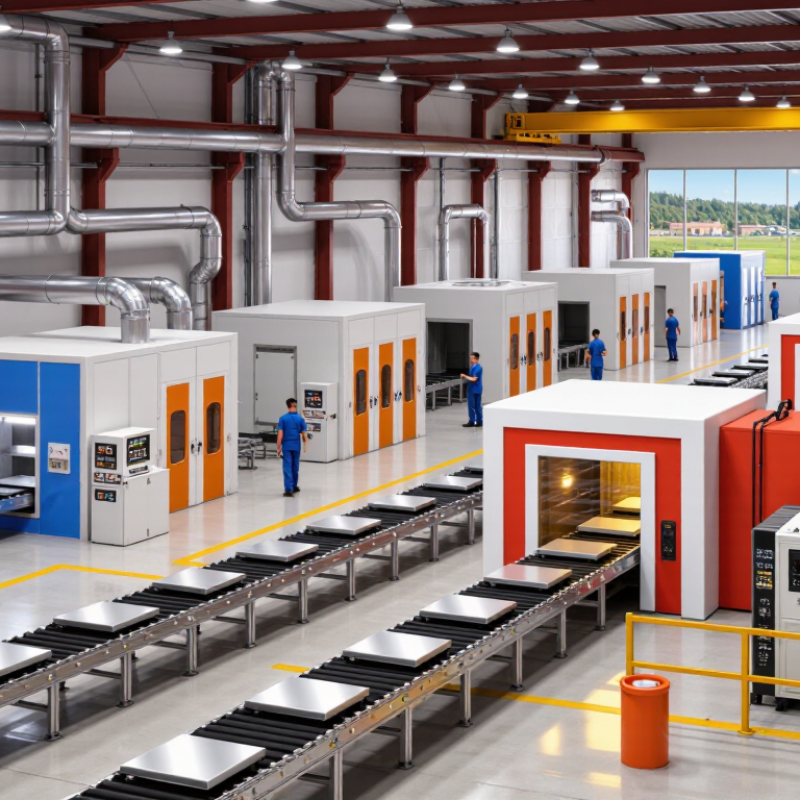
A complete painting line is more than a spray booth with an oven beside it. It is a coordinated system of booths, curing ovens, conveyors, controls, and filtration equipment. In practical evaluations, the booth deserves close attention. Stable airflow keeps overspray away from finished surfaces. Proper lighting reveals thin coverage, dust, and uneven edges. Operators also need comfortable access for cleaning and routine adjustments. Small design choices matter.
The oven must deliver consistent heat across the entire chamber. Temperature mapping can expose cold corners that damage coating quality. Insulated panels reduce heat loss and improve energy control. Safety interlocks, emergency stops, and clear maintenance access should be standard features. A conveyor connects every stage. Its speed controls coating thickness, curing time, and production capacity. Smooth movement prevents swinging parts from touching booth walls or fixtures. It sounds simple.
Reliable suppliers usually provide layout drawings, airflow data, oven testing records, and commissioning support. They should also explain filter replacement, burner inspection, electrical protection, and cleaning intervals. In field reviews, weak documentation often creates more trouble than weak hardware. No line is perfect. A conveyor may need slower settings during humid weather, while a booth may require frequent airflow checks after filter changes. These practical adjustments should be included in training, not left to guesswork. A careful supplier studies part size, coating type, daily output, factory space, and local safety requirements before proposing equipment.
| System Area | Essential Equipment | Typical Technical Range | Primary Function | Key Selection Criteria |
|---|---|---|---|---|
| Parts Loading | Loading stations, racks, fixtures, and identification systems | Part loads commonly range from less than 10 kg to more than 1,000 kg per carrier, depending on the conveyor design | Positions parts consistently and maintains traceability throughout the line | Part geometry, load balance, ergonomic access, fixture repeatability, and changeover time |
| Surface Pretreatment | Spray or immersion cleaning, rinsing, phosphating or zirconium treatment, and water management | Multiple stages are typically used; process temperatures often range from ambient conditions to approximately 60°C, depending on chemistry | Removes oils and contaminants while improving coating adhesion and corrosion resistance | Material compatibility, bath control, spray coverage, chemical consumption, wastewater requirements, and maintenance access |
| Dry-Off Oven | Insulated chamber, recirculation fans, burners or electric heaters, exhaust, and temperature controls | Typical operating temperatures are approximately 100–180°C, with residence times commonly between 10 and 30 minutes | Evaporates residual water before painting | Uniform air temperature, airflow distribution, energy efficiency, insulation quality, and safe exhaust design |
| Painting Booth | Open-front, enclosed, downdraft, crossdraft, or side-draft booth with filters and exhaust fan | Air velocity and airflow are engineered for the process; spray booths commonly use filtered make-up air and controlled exhaust | Contains overspray and provides a controlled environment for liquid or powder application | Booth airflow, filter loading, operator safety, lighting, access doors, fire protection, and applicable ventilation codes |
| Application Equipment | Manual or automatic spray guns, reciprocators, pumps, pressure tanks, powder guns, or electrostatic equipment | Selection depends on coating type, transfer efficiency, viscosity, part complexity, and required film thickness | Applies primer, basecoat, topcoat, or powder at a controlled rate | Transfer efficiency, coating compatibility, atomization quality, color change time, automation level, and cleaning requirements |
| Flash-Off Zone | Controlled-temperature tunnel or open conveyor section with ventilation | Residence time is commonly several minutes and is determined by coating formulation and production speed | Allows solvents or water to evaporate before curing | Ventilation, temperature control, part spacing, solvent concentration management, and line synchronization |
| Curing Oven | Batch or conveyorized oven with heating system, recirculation, exhaust, controls, and safety interlocks | Powder coatings commonly cure at approximately 160–200°C metal temperature; liquid coatings vary by formulation | Develops the final mechanical, chemical, and appearance properties of the coating | Metal temperature uniformity, oven profile, fuel type, heat recovery, insulation, exhaust balance, and process validation |
| Cooling Zone | Ambient-air or forced-air cooling tunnel with fans and guarded discharge area | Cooling time depends on part mass, material, conveyor speed, and target handling temperature | Reduces part temperature before inspection, packing, or the next process | Air cleanliness, cooling uniformity, fan noise, energy use, and prevention of coating contamination |
| Conveyor System | Overhead chain, power-and-free, monorail, floor conveyor, or reciprocating transfer system | Line speeds may range from less than 1 m/min to more than 20 m/min, depending on takt time and process length | Moves parts through each treatment, application, curing, and inspection stage | Load capacity, speed control, accumulation, incline capability, lubrication, carrier design, and maintenance access |
| Air Pollution Control | Dry filters, wet collectors, cartridge filters, activated-carbon units, oxidizers, or other approved emission controls | The required system depends on coating chemistry, exhaust volume, particulate loading, and local emission limits | Controls particulate matter, volatile organic compounds, and other process emissions | Permit requirements, capture efficiency, pressure drop, filter replacement cost, monitoring, and energy consumption |
| Electrical and Controls | PLC, HMI, variable-frequency drives, sensors, safety relays, temperature controllers, and data logging | Controls are configured for the number of zones, motors, burners, sensors, and required production recipes | Coordinates equipment operation, alarms, recipes, interlocks, and production data | Cybersecurity, remote diagnostics, spare-parts availability, recipe management, safety circuits, and integration with factory systems |
| Inspection and Quality Control | Film-thickness gauges, gloss meters, color instruments, adhesion testers, temperature probes, and visual inspection stations | Measurement ranges must match the coating system; dry-film thickness is commonly specified in micrometres | Verifies coverage, appearance, adhesion, cure, and process consistency | Gauge accuracy, calibration control, inspection frequency, sampling plan, defect classification, and record retention |
| Supplier Evaluation | Engineering, fabrication, installation, commissioning, training, validation, and after-sales service | Leading global suppliers typically offer modular or turnkey solutions tailored to part size, throughput, coating process, and regional regulations | Reduces integration risk and supports stable long-term production | Relevant project references, compliance documentation, total cost of ownership, delivery capability, local service, warranty, and spare-parts support |
It includes spray booths, curing ovens, conveyors, controls, and filtration equipment. Each part must work together.
Stable airflow moves overspray away from finished surfaces. It also supports consistent coating quality. Poor airflow needs quick correction.
Check lighting, filter access, cleaning space, and airflow readings. Bright lights can reveal thin coverage, dust, and uneven edges.
The oven should provide even heat across the chamber. Temperature mapping can reveal cold corners. Insulated panels help reduce heat loss.
Essential features include safety interlocks, emergency stops, and clear maintenance access. These details should not be treated as optional.
Conveyor speed influences coating thickness, curing time, and output. Smooth movement prevents parts from swinging into walls or fixtures.
Request layout drawings, airflow data, oven test records, and commissioning support. Filter schedules and maintenance instructions are also useful.
Safety requirements should cover ventilation, electrical protection, fire controls, and hazardous areas. Quality and environmental systems also need review.
No. A current certificate does not prove strong shop-floor habits. Review control panels, emergency stops, maintenance records, and audit findings.
Discuss part size, coating type, daily output, factory space, and local safety requirements. Humidity may require slower conveyor settings. Plans can still miss details.
A complete Painting Line is an integrated production system that typically includes preparation areas, spray booths, curing or drying ovens, conveyors, ventilation, filtration, and control equipment. Each component must work together to provide consistent coating quality, safe material handling, and efficient movement of parts. When comparing suppliers, manufacturers should examine transfer efficiency, including the EPA’s 65% HVLP benchmark, as well as application consistency, automation capabilities, maintenance support, and system flexibility.
The most important selection metrics include throughput, overall equipment effectiveness (OEE), VOC emissions, energy consumption, coating utilization, and powder recovery performance. A reliable supplier should also be able to design systems that meet recognized safety and quality requirements, such as NFPA 33, ATEX, ISO 9001, and ISO 14001. By evaluating technical performance, operating costs, environmental impact, compliance, and long-term service capability, companies can choose a Painting Line that supports productivity, sustainability, and dependable global operations.

 Cherish