Choosing a Powder Coating Line can reshape how a manufacturer controls quality, cost, and production speed. It is not merely a row of machines. It is a connected process involving cleaning, pretreatment, drying, powder application, curing, cooling, and inspection. Each stage affects the final finish.
Kevin Biller, an experienced powder coating industry consultant, has stated, “Consistency is the foundation of a successful powder coating operation.” This principle explains why many businesses invest in an integrated Powder Coating Line instead of separate, disconnected equipment. A controlled line can maintain more stable temperatures, coating thickness, conveyor movement, and curing times. These details matter when producing metal cabinets, automotive components, appliances, or architectural parts.
The practical benefits are visible on the factory floor. A well-designed line can reduce overspray waste and shorten handling time. Operators can monitor oven temperatures and adjust spray settings before defects spread across a batch. Powder recovery systems may also improve material efficiency, although performance depends on equipment design and color changes.
A Powder Coating Line can support cleaner production, too. Powder coatings generally contain little or no solvent, which may help reduce certain emissions. However, this does not make every operation automatically sustainable. Energy consumption, pretreatment chemicals, compressed air, and oven efficiency still require careful review.
The decision is not always simple. A small company may need flexible equipment rather than maximum automation. Poor layout planning can create bottlenecks. Even advanced machinery cannot replace trained operators and regular maintenance. The strongest investment is usually the one matched to product size, daily volume, finish requirements, and realistic growth plans.
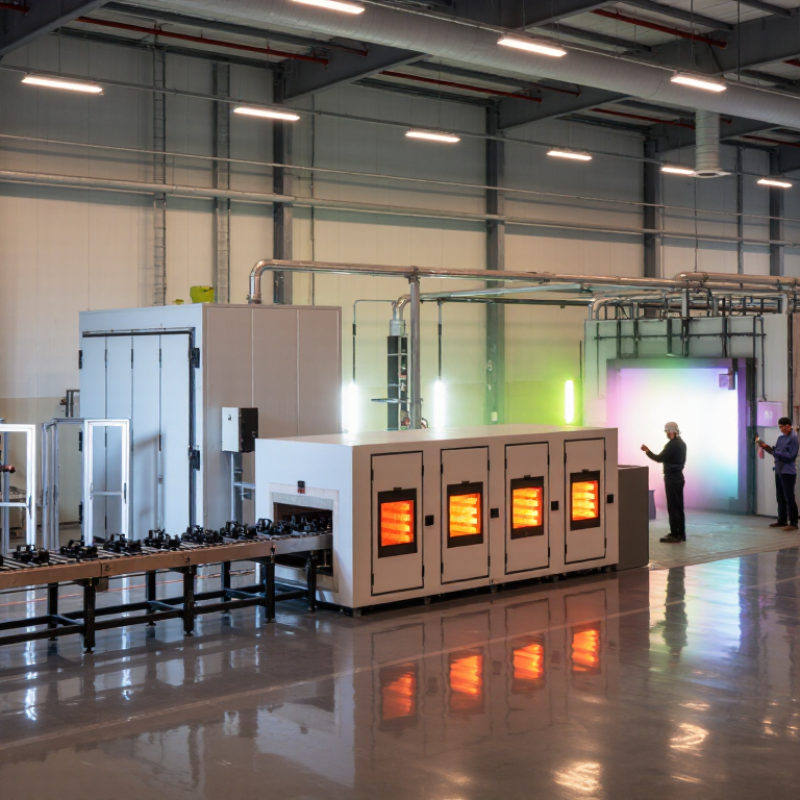
A powder coating line is an integrated production system for applying and curing dry powder on metal parts. It usually includes loading stations, pretreatment tanks, a drying oven, a spray booth, powder recovery equipment, and a curing oven. A conveyor moves each part through these stages at a controlled speed. The process creates a durable finish without liquid paint solvents.
The U.S. Environmental Protection Agency identifies powder coating as a low-VOC finishing method because the coating contains little or no solvent. Industry guidance from the Powder Coating Institute also reports transfer efficiencies that can exceed 95% in well-controlled applications. This reduces overspray waste, although actual results depend on part shape, operator settings, and recovery design.
That sounds simple. It is not.
A practical line needs balanced airflow, stable oven temperatures, and reliable pretreatment. A thin bracket may cure quickly, while a heavy steel frame needs more heat and time. Poor grounding can leave uneven coverage around corners.
The 2024 Global Powder Coatings Market report by Grand View Research estimates continued market growth, driven partly by efficiency and environmental demands. Yet a larger line is not always better. Careful testing, energy measurement, and maintenance records should guide the design. Even experienced teams sometimes underestimate color-change time.
A powder coating line moves metal parts through a controlled finishing process. Workers first clean the surfaces to remove oil, dust, and rust. Pretreatment improves adhesion and helps protect the metal from corrosion. After drying, operators hang each part on a grounded conveyor. The grounding step matters.
A spray gun charges the dry powder electrically. The grounded part attracts the particles, creating an even-looking layer. The coated part then enters a curing oven, where controlled heat melts and bonds the powder. Cooling follows before workers inspect coverage, color, thickness, and surface defects. The process is efficient, but it is not magic. Poor grounding, dirty hooks, or incorrect oven settings can produce thin edges, rough patches, or weak adhesion. Even experienced teams sometimes need to adjust conveyor speed or powder flow.
Tips: Keep hooks clean and check grounding throughout each shift. Follow the powder supplier’s technical data for curing temperature and time. Record film thickness and oven conditions for every production run. Small records can reveal large problems. Leave enough spacing between parts to prevent contact and uneven coverage. A test panel is also useful before full production, especially when changing metal thickness or part design. Some mistakes only become visible after cooling, which makes rushed inspections risky.
Powder coating lines combine surface preparation, drying, powder application, curing, and cooling into a repeatable production process. The chart shows indicative dwell times commonly used for a complete coating cycle; actual settings depend on the part material, geometry, powder formulation, and oven design.
A controlled line can improve process consistency, reduce manual handling, and support efficient material use because unused powder may be collected and reused when the coating system and powder type allow it.
Why Choose a Powder Coating Line for Your Business?
A powder coating line is more than a spray booth and an oven. It is a connected production system. The equipment usually includes a pretreatment washer, drying oven, conveyor, spray booth, powder guns, curing oven, and control panel. A recovery unit collects suitable overspray for possible reuse. Filters protect air quality and keep the booth cleaner.
Grand View Research estimated the global powder coatings market at about USD 15.5 billion in 2023. Its report also projected continued growth through 2030. The U.S. Environmental Protection Agency describes powder coating as a low-VOC finishing method because the coating contains little or no solvent. These figures support investment, but they do not guarantee profit. Poor airflow, uneven pretreatment, or an undersized oven can quickly reduce quality.
Tips: Match the conveyor speed with oven capacity. Check metal temperature, not only oven air temperature. Keep test panels beside the line. They reveal thin edges, pinholes, and color variation early. The first layout is rarely perfect. Real production often exposes problems that drawings miss. A reliable line also needs grounding checks, booth filtration, powder feed controls, and regular maintenance records. Industry guidance from the Powder Coating Institute emphasizes process control and safe operating practices. Cheap equipment may look efficient at purchase, but unstable temperature control creates expensive rework. That lesson is easy to overlook.
A powder coating line can bring measurable business benefits beyond a cleaner-looking product. The process applies dry powder with an electrostatic charge, then cures it in a controlled oven. This creates a tough finish that resists chipping, corrosion, and everyday handling. Customers notice the difference on equipment frames, metal furniture, and outdoor components.
Operating costs may also become more predictable. Powder contains no liquid solvent, and unused material can often be collected and reused when the color and process allow it. A well-designed line reduces drying time and supports consistent production volumes. It can also limit overspray and simplify workplace housekeeping. Small improvements matter.
However, powder coating is not a shortcut. Surface preparation, grounding, film thickness, and oven temperature strongly affect the final result. In practical production work, poor pretreatment can cause peeling even when the coating looks perfect at first. Operators need documented checks and regular equipment maintenance. That discipline supports reliable quality and fewer rework hours. It also helps businesses provide clearer delivery estimates. The investment may feel heavy for low-volume shops, especially when color changes are frequent. A careful cost review should include energy use, labor, curing capacity, ventilation, and future demand. The best return usually comes from steady production, not occasional jobs.
| Business Dimension | Powder Coating Line Benefit | Typical Industry Reference | Business Impact |
|---|---|---|---|
| Material Utilization | Electrostatic application charges powder particles so they adhere efficiently to grounded metal parts. | Application transfer efficiency is commonly around 60%–95%, depending on part geometry, gun settings, operator technique, and recovery equipment. | Lower coating loss and more predictable material consumption. |
| Overspray Recovery | Compatible overspray can be collected and reused when the powder system and color-management process allow it. | Recovery is most practical for single-color or tightly controlled production runs; mixed colors generally require separation or disposal. | Can reduce raw-material waste and improve coating-line efficiency. |
| VOC and Solvent Use | Powder coatings are typically formulated without liquid solvents and are applied as dry powder. | Powder coating systems generally produce negligible VOC emissions during application compared with solvent-based liquid coatings; curing may still generate small emissions. | Supports cleaner production areas and may simplify air-emission compliance requirements. |
| Curing Temperature | The coating is melted and chemically cured in an oven after application. | Many conventional powder coatings cure at approximately 160–200°C metal temperature, although low-temperature products and formulations vary. | Provides a repeatable curing process while requiring suitable oven capacity and heat management. |
| Coating Thickness | Powder can form a uniform protective film in a single application cycle when properly controlled. | Common dry-film thicknesses are often approximately 50–125 micrometres, depending on the product specification and end use. | May reduce the need for multiple coats and help standardize finish quality. |
| Durability | The cured film provides resistance to impact, abrasion, corrosion, and chemicals when the correct powder chemistry and pretreatment are selected. | Performance varies significantly by resin type, substrate preparation, film thickness, exposure conditions, and test standard. | Can reduce premature coating failure, rework, and maintenance requirements. |
| Production Throughput | A continuous line can integrate pretreatment, drying, powder application, curing, cooling, and inspection. | Actual throughput depends on conveyor speed, oven length, part size, loading density, cure schedule, and color-change frequency. | Improves workflow consistency and supports higher-volume production planning. |
| Finish Appearance | Powder coatings are available in a broad range of colors, gloss levels, textures, and special-effect finishes. | Appearance consistency depends on powder storage, grounding, film-thickness control, oven uniformity, and contamination prevention. | Helps maintain consistent product appearance across production batches. |
| Worker and Facility Safety | Eliminates routine handling of large volumes of liquid coating solvents, although powder dust and curing heat still require controls. | Ventilation, dust collection, grounding, housekeeping, personal protective equipment, and fire-safety procedures remain essential. | May improve workplace conditions when the system is properly designed and operated. |
| Operating Cost Control | Lower solvent requirements, efficient powder transfer, and possible overspray recovery can support cost control. | Total cost depends on powder price, pretreatment chemicals, electricity or fuel, labor, maintenance, recovery rate, and equipment utilization. | Creates opportunities to reduce cost per coated part over the equipment life cycle. |
| Quality Control | Automated guns, conveyor controls, oven monitoring, and film-thickness checks provide measurable process parameters. | Common checks include substrate cleanliness, grounding, film thickness, cure verification, adhesion, appearance, and corrosion performance. | Reduces variation and makes defects easier to identify and correct. |
Note: Performance and cost results vary with part geometry, substrate, powder formulation, pretreatment system, line design, production volume, and operating conditions.
Choosing the right powder coating line starts with your products, not with equipment catalogs. Measure the largest part, average batch size, coating thickness, and daily output. A small workshop may need a compact manual booth, while continuous production often requires automated spraying and conveying. Plan for tomorrow’s workload, but avoid paying for capacity that will remain idle.
Pretreatment deserves careful attention. Oil, rust, and moisture can weaken adhesion before powder reaches the surface. Select cleaning stages according to the substrate and contamination level.
Then match the curing oven to part dimensions, metal thickness, and target temperature. Poor airflow can create uneven finishes, even when the powder application looks perfect. It happens.
From practical line evaluations, maintenance access is often overlooked. Operators should reach filters, guns, burners, and conveyor points without awkward climbing. Ask suppliers for documented test results, energy data, installation requirements, and training details. Confirm powder recovery compatibility if color changes are frequent. A quick color change may save hours each week.
Safety controls also deserve direct inspection. Check ventilation, grounding, temperature monitoring, and emergency shutdown features. Local requirements still need professional verification. Do not select a line based only on its hourly capacity. Consider labor skill, floor space, utility costs, future product changes, and available technical support. A technically impressive system can become expensive if your team cannot maintain it consistently. Review the plan with operators before signing. Their daily experience may reveal a problem hidden in the drawings.
It cleans, dries, coats, cures, cools, and inspects metal parts in sequence. The process is controlled, not magical.
Pretreatment removes oil, dust, and rust from the surface. It improves adhesion and helps reduce corrosion.
A spray gun electrically charges the powder. The grounded metal attracts the particles, forming an even-looking layer.
Controlled heat melts and bonds the powder to the metal. Operators must follow the powder’s specified temperature and curing time.
Common equipment includes a pretreatment washer, drying oven, conveyor, spray booth, powder guns, curing oven, and control panel.
Poor grounding may create thin edges, uneven coverage, or weak adhesion. Dirty hooks can cause similar trouble.
Keep hooks clean and check grounding during every shift. Leave space between parts to prevent contact and uneven coating.
Records can connect defects with oven temperature, film thickness, or conveyor speed. Test panels reveal pinholes and color variation early. Small checks matter.
A Powder Coating Line is an integrated production system designed to clean, coat, cure, and finish metal parts with a durable layer of powder-based material. The process typically begins with surface preparation to remove oil, dust, and oxidation. Powder is then applied electrostatically, allowing it to adhere evenly to the grounded workpiece. After application, the coated parts enter a curing oven, where controlled heat melts and bonds the powder into a smooth, protective finish. Depending on production needs, the line may include pretreatment equipment, drying ovens, spray booths, recovery units, conveyors, curing ovens, and quality inspection tools.
For businesses, powder coating can improve product durability, appearance, efficiency, and environmental performance while reducing material waste. It is suitable for both small-batch operations and high-volume manufacturing. Choosing the right Powder Coating Line requires evaluating product size, material type, coating requirements, production capacity, available workspace, energy use, automation level, and future expansion plans. A properly selected system can support consistent quality, lower operating costs, and long-term business growth.

Cherish