Engineered to comply with stringent European directives, our flagship range features heavy-duty structural build quality and redundant mechanical locking mechanisms.
In the realm of modern automotive diagnostics, storage systems, and maintenance facilities, the four-post car lift stands as an indispensable asset. Whether deployed in private car collections, commercial fleet maintenance depots, or high-density residential stackers, the structural and operational safety of these heavy systems hinges on one key component: the mechanical safety lock mechanism.
Under the European Union Machinery Directive, particularly governed by EN 1493 (Vehicle Lifts Safety Requirements), compliance is not merely a legal checkbox but a fundamental structural necessity. CE Certification guarantees that a lift's safety locks can sustain design limits during dynamic operating stresses, unexpected hydraulic decompression, and emergency braking scenarios. This whitepaper analyzes safety lock systems, evaluates global procurement pathways, explores China's smart manufacturing paradigm shift, and answers the industry's most pressing technical questions.
The mechanical architecture of a 4-post car lift distributes vehicle loads across four structural columns. A secondary, fail-safe mechanism is mandatory to secure the lift platform, protecting workers and vehicles from catastrophic hydraulic failure. Let's look at the primary mechanics of these systems:
Structural steel ladder plates are integrated within all four vertical posts. Hardened steel locking pawls slide along these plates during ascent, locking into position at set increments via gravity and torsion springs. The platform cannot settle further once engaged, preventing sudden descent.
Modern lifts utilize either **pneumatic** (compressed air) or **electromagnetic solenoids** to release the locking pawls. Standard pneumatic releases apply system air pressure to retract all four locks simultaneously. High-reliability locks default to a closed state, remaining locked if power or air pressure is lost.
In wire-rope hydraulic lifts, cable failure poses a major structural risk. The slack-cable device features a secondary safety latch held open by active cable tension. If a cable stretches excessively or snaps, a torsion spring snaps the secondary latch into the ladder plate, halting the platform immediately.
The structural performance of safety lock components directly impacts E-E-A-T ratings for automotive workshops. The table below lists mechanical baseline values for high-integrity 4-post lift lock assemblies:
| Technical Characteristic | Standard Specification Limit | CE Compliance Objective (EN 1493) |
|---|---|---|
| Safety Lock Material | Q355B structural steel or equivalent | High yield strength under dynamic shear stresses |
| Actuation Interface | Pneumatic or electromagnetic solenoid | Fail-safe closure upon energy loss |
| Static Safety Margin | Minimum 1.5 times the rated load limit | Prevention of permanent deformation at critical points |
| Engagement Interval | 75mm to 100mm mechanical increments | Limits max drop height prior to mechanical lock |
| Redundant Mechanisms | Slack-cable trigger & thermal overload cut-off | Automatic arrest of lift platform on structural failure |
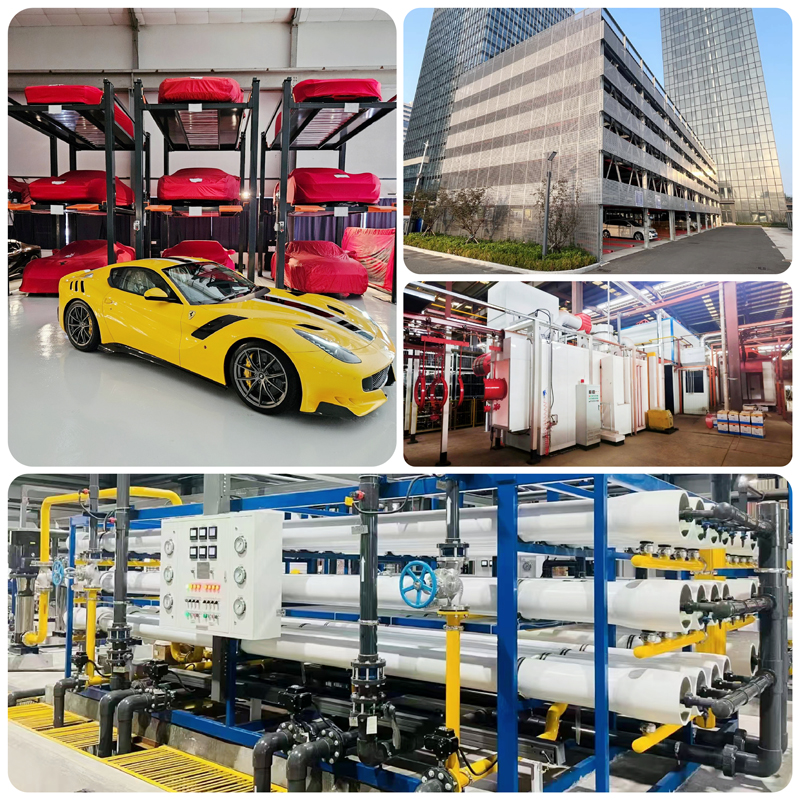
Qingdao Cherish is an integrated industry and trade enterprise dedicated to the design, manufacture, and global supply of intelligent parking equipment and industrial processing solutions.
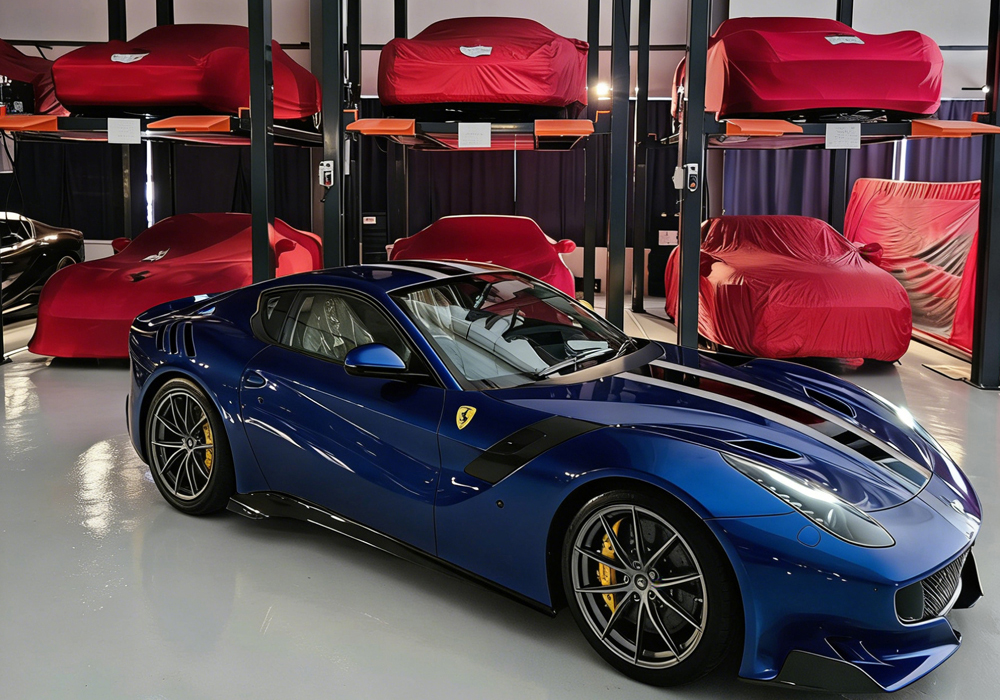
Our Parking Systems Division focuses on the development and production of car parking lifts, automated parking systems, car stackers, and customized parking solutions. Designed to maximize space utilization and operational efficiency, our systems are widely applied in residential buildings, commercial facilities, hospitals, and urban developments. Through continuous engineering innovation and strict quality control, we deliver safe, reliable, and space-saving parking solutions tailored to global project requirements.
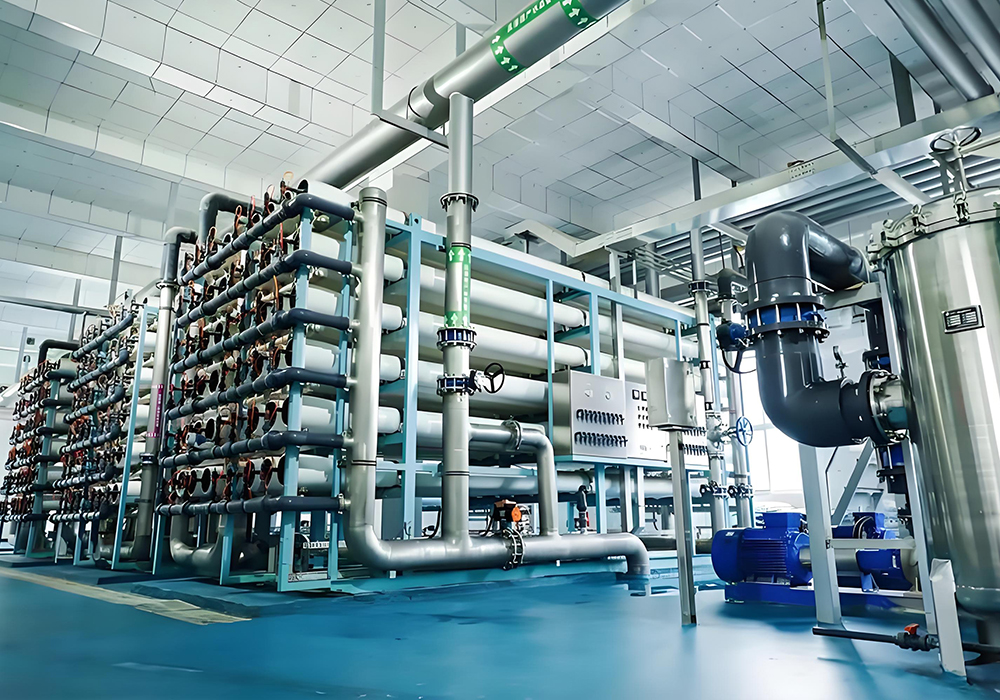
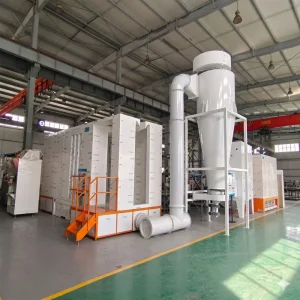
Our Industrial Equipment Division provides advanced powder coating lines and sewage treatment plant solutions for industrial applications. These systems are engineered to improve production efficiency, surface finishing quality, and environmental sustainability. By integrating automation technology with durable system design, we help clients optimize manufacturing processes while meeting modern environmental standards and regulatory requirements.
Procuring structural lifting equipment requires navigating diverse national safety frameworks and quality standards. International buyers must confirm certification details before ordering bulk shipments:
Compliance with the Machinery Directive 2006/42/EC and standard **EN 1493** is mandatory. This requires redundant mechanical safety locks, automatic locking systems, safety margins on hydraulic components, and physical drop tests.
The Automotive Lift Institute (ALI) verifies certification under ANSI standards. This process requires structural calculation checks, third-party validation, and verification of mechanical lock release cycles.
Australian Standards mandate strict hazard controls and lock inspections. Structural engineering certifiers must verify seismic loading resistance and the structural integrity of lift columns.
In addition to safety compliance, structural coatings are key for buyers in coastal or humid regions. Powder coating quality directly affects the life of locking plates. Salt spray testing and high-durability coatings are critical to prevent corrosion on moving safety locks.
China's manufacturing sector has transitioned from mass production to precision-engineered automation. Industry 4.0 facilities leverage integrated supply chains to provide cost-efficiency, high precision, and quick turnaround times.
Global logistics challenges require resilient manufacturing partners. Qingdao Cherish manages production from design through testing and surface treatment, minimizing external supply delays. Our operations ensure on-time delivery for large commercial parking projects and residential distributor orders.
Become a Global PartnerFour-post lifts with CE-certified lock assemblies operate in a range of demanding environments worldwide:
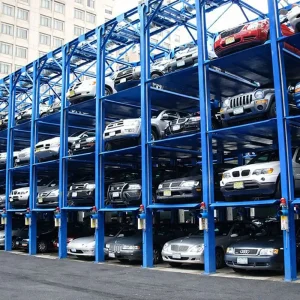
In city centers where space is limited, parking stackers convert single parking bays into double or triple storage levels. Mechanical safety locks secure the elevated vehicles, enabling long-term storage without relying on continuous hydraulic pressure.
Fleet operations require rapid turnaround times. Heavy-duty 4-post lifts with quick air-lock releases help technicians work safely beneath vehicles, speeding up regular maintenance tasks.
Basements or garages with low headrooms present unique challenges. Specialized stackers utilize tilted platforms or pit-mounted scissor lifts to optimize limited space while ensuring safety lock engagement.
Our engineering team designs systems tailored for residential, commercial, and industrial applications globally:
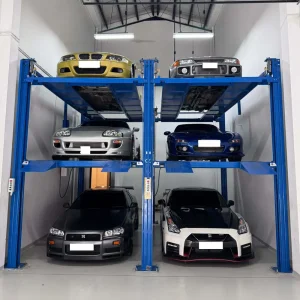
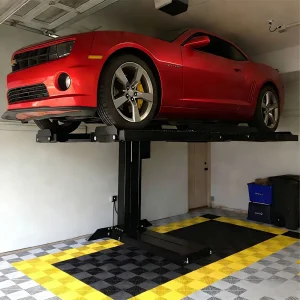
The Triple-Level Parking Lift is designed to maximize parking space. Accommodating both sedans and SUVs, this lift offers a practical solution for those seeking efficient car storage in residential or commercial settings. Its durable construction and space-saving design are ideal for environments where space is at a premium.
Offering loading capacities of 2300kg or 2700kg, this lift caters to diverse vehicle parking needs. With a maximum lifting height of 2100mm, it fits two vehicles within the same footprint. Column heights are adjustable to suit varied ceiling restrictions.
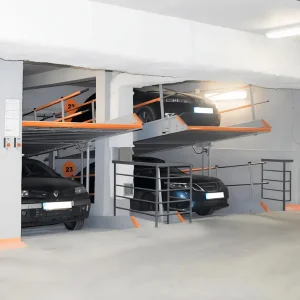
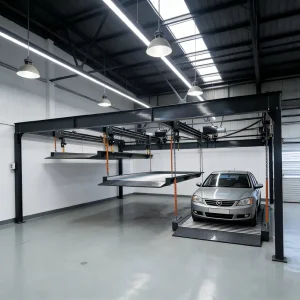
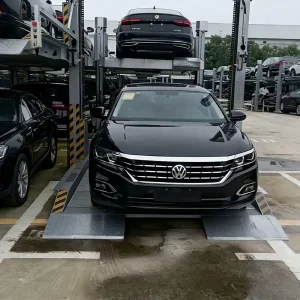
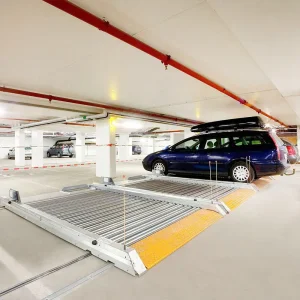
An ideal solution for spaces with low ceilings, such as basements. Its tilting platform design optimizes vertical space, offering adjustable lifting heights from 1400mm to 1800mm with a loading capacity of 2000kg.
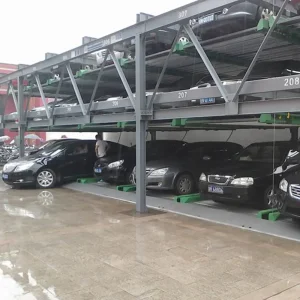
The 2-6 levels automatic puzzle parking system is a cost-effective choice for modern facilities. Operating both indoors and outdoors, this automated system stacks and slides platforms to optimize high-density vehicle storage.
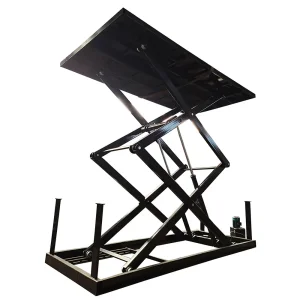
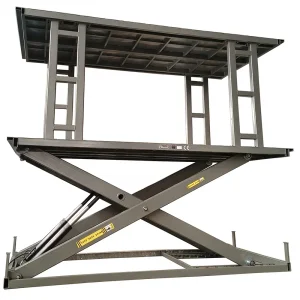
Featuring a double-deck design, this customizable scissor lift stores vehicles below ground, keeping the driveway clear. Very popular for villa installations, it combines functional storage with property aesthetics.
Our industrial divisions design complete powder coating lines with advanced recovery units, as well as wastewater treatment plants that support sustainable water management and zero-discharge setups.
EN 1493 specifies safety requirements for design, calculations, verification, and testing of vehicle lifts. CE certification under this standard guarantees that safety locks can withstand sudden load shifts and structural stress. It also certifies the presence of slack-cable mechanisms and overload protection devices.
Pneumatic lock releases use compressed air cylinders to pull all four mechanical locking dogs out of their notches simultaneously via a single control valve. Manual releases require operators to walk to each post and release locks by hand or pull a linkage system. Pneumatic releases are safer and more efficient for commercial settings.
A slack-cable device features a secondary, spring-loaded lock safety dog that is kept retracted by the tension of the main lifting wire rope. If a cable slackens or fails, the tension drops to zero, and the heavy torsion spring immediately pushes the safety dog into the locking ladder. This prevents the platform from falling.
Regular maintenance includes inspecting locking teeth for wear, verifying lock springs are properly tensioned, checking pneumatic line connections for leaks, and ensuring the lock ladder is clear of debris and lubricated. These components should be checked monthly in busy commercial environments.
Safety locks operate inside structural columns where moisture can accumulate. Standard wet paints can chip and allow rust to form. Quality electrostatic powder coating forms a thick, impact-resistant layer that prevents rust and keeps locking components sliding smoothly for years.
Yes. However, outdoor installations require hot-dip galvanized parts or high-grade powder coatings. You must also use low-temperature hydraulic fluid, protect electric switches from water, and ensure safety locks remain clear of snow and ice accumulation.
These mechanical and hydraulic platforms are built for durability and space efficiency in private, commercial, and industrial facilities.
 Cherish