Engineered to maximize footprint efficiency and facilitate secure floor-to-floor logistics for high-value inventory.
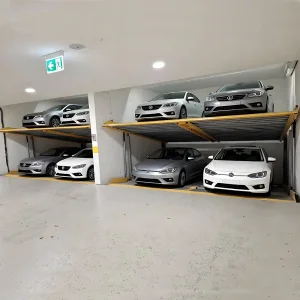
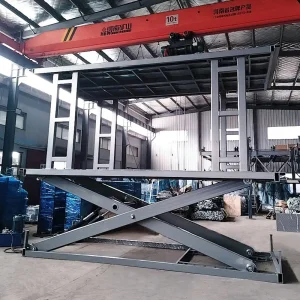
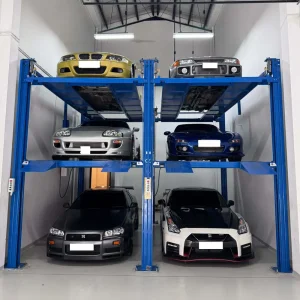
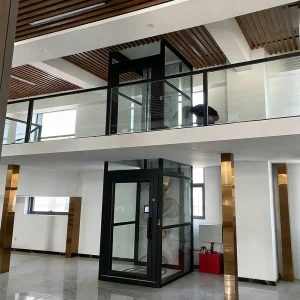
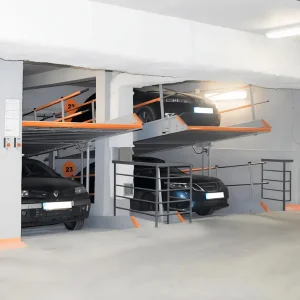
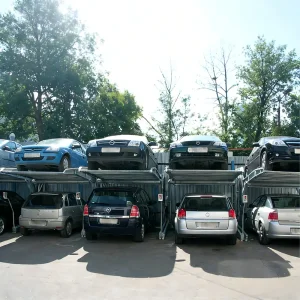
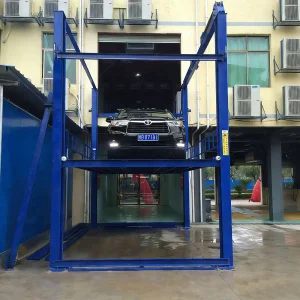
In modern automotive commercial architecture, maximizing available square footage is the primary driver of profitability. Automotive showrooms must display a diverse fleet, maintain dynamic customer hand-over zones, and secure inventory under strict space limits. CE Certification car elevators for car dealerships have evolved from simple utility systems to critical spatial logistics infrastructure. By integrating vertical mobility directly into the dealership structural framework, manufacturers allow retailers to build upward, reducing land acquisition costs while creating a seamless architectural showcase.
The global automotive retail environment is undergoing a deep structural transformation. The shift towards multi-level vertical showrooms is driven by two main macro-trends: soaring real estate values in urban centers and the logistical demands of heavy Electric Vehicles (EVs).
Traditional horizontal dealership models, requiring sprawling open-air display yards, are economically unviable in metro areas. Land costs in Tier-1 global cities require vertical structural footprints. Developing upward requires heavy-duty vehicle elevators that can move stock quickly and safely between underground storage, ground-floor showrooms, and rooftop inventory reserves.
Electrification has fundamentally changed structural elevator specifications. Internal Combustion Engine (ICE) sedans typically weigh between 1,500 kg and 2,000 kg. In contrast, EVs equipped with massive under-floor battery packs regularly weigh between 2,500 kg and 3,500 kg. This weight difference requires dealership elevators to have heavier lifting capacities, reinforced scissor structures, and stronger hydraulic guide rails. Dealerships must select systems built to manage these concentrated loads without metal fatigue or pressure drops over long duty cycles.
Moving storage vertical reduces footprint requirements by up to 75% while maintaining massive on-site stock availability for immediate customer delivery.
Modern platforms feature structural steel decks (Q345B grade) to handle heavy lithium-ion batteries and prevent deck sagging.
CE certified hydraulic networks include double safety lock valves, mechanical drop-prevention bars, and speed limiters.
Selecting the correct mechanical lifter architecture is essential for long-term reliability and site compatibility. Different structures meet specific architectural requirements, building designs, and soil load profiles.
| System Type | Typical Capacity | Ideal Application | Key Mechanical Advantages |
|---|---|---|---|
| Hydraulic Double-Deck Invisible Scissor Lift | 3,000kg - 6,000kg | Aesthetic yards, villas, high-end showroom basements | Zero vertical profile above ground level when lowered; underground parking hidden within landscaping. |
| Four Post Hydraulic Car Lift Elevator | 3,000kg - 5,000kg | Floor-to-floor heavy vehicle transfers in workshops | High stability, minimal pit requirements, customizable platform sizing. |
| Double Rail Guide Car/Freight Elevator | 2,000kg - 4,000kg | Showrooms with structural headroom or pit constraints | Can be installed without a deep pit; compact lateral rail configurations. |
| Multi-Level Puzzle & Sliding Platform Systems | 2,000kg - 2,500kg per bay | High-density inventory storage areas | Automated lateral and vertical movements maximize vehicle storage density. |
For locations where above-ground structures are restricted by local zoning laws or aesthetic considerations, the Underground Invisible Scissor Car Elevator is a highly effective engineering solution. When completely lowered, the upper deck aligns perfectly with the adjacent floor level, maintaining visual continuity. High-strength steel cross-arms and synchronized dual cylinders ensure stable lifting, even with off-center loads.
For straightforward floor-to-floor vertical logistics, Four Post and Double Rail Guide Elevators provide long-lasting service. Guided by cold-drawn steel rails and powered by high-pressure hydraulic cylinders, these lifts deliver smooth travel profiles and quiet operation, which is critical for showroom environments where noise must be kept to a minimum.
Sourcing large machinery internationally requires thorough regulatory inspection. Safety in vertical vehicle logistics is critical; system failures can cause inventory damage and risk employee safety.
For buyers in the European Economic Area (EEA) and global markets that recognize European standards, the CE mark proves that the equipment meets strict health, safety, and environmental protection requirements. A genuine CE certification for a car elevator involves testing to meet these standards:
Procurement departments should verify these mechanical and safety features during technical sourcing:
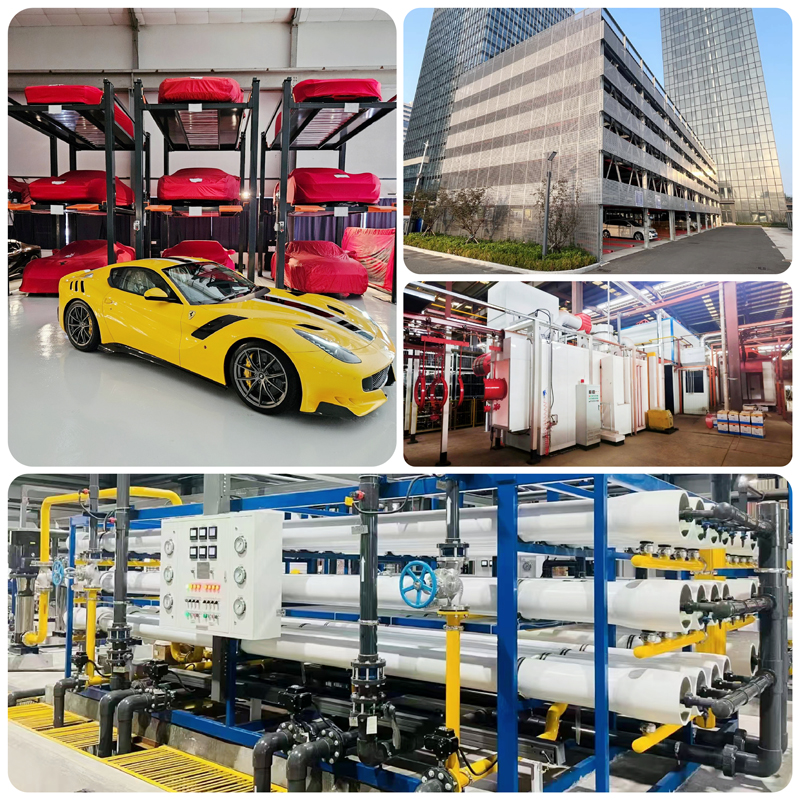
Qingdao Cherish is an integrated industry and trade enterprise dedicated to the design, manufacture, and global supply of intelligent parking equipment and industrial processing solutions.
Founded by a team of experienced engineers and international business professionals, the company was established with a clear mission: to provide efficient, durable, and sustainable equipment solutions through continuous innovation, precision manufacturing, and customer-focused service. From initial concept design and technical planning to production, delivery, and after-sales support, we ensure consistent quality and dependable performance throughout every project lifecycle.
Today, our business operates through two specialized divisions to better serve diverse market needs and provide focused expertise across different industries.
Focuses on the development and production of car parking lifts, automated parking systems, car stackers, and customized parking solutions designed to maximize space utilization.
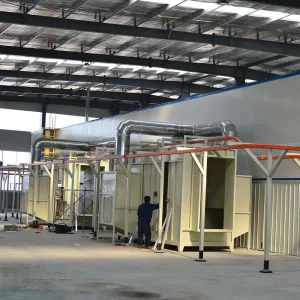
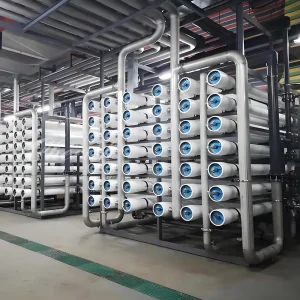
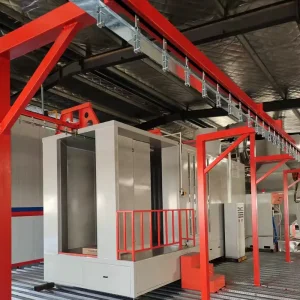
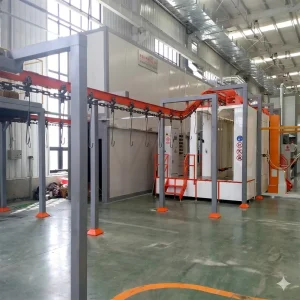
Provides advanced powder coating lines and sewage treatment plant solutions for industrial applications, improving efficiency and environmental sustainability.
Modern vehicle elevator technology goes beyond simple structural engineering. Integrating advanced control systems, internet connectivity, and surface finish coatings ensures long equipment lifespans and excellent operational uptime.
Equipped with smart sensors, modern elevators monitor operational metrics like cycle count, pressure shifts, and component wear, allowing operators to schedule maintenance proactively and minimize unexpected downtime.
By using in-house automated powder coating lines, elevator parts receive a durable, highly corrosion-resistant finish. This ensures the steel structural frames remain protected even when installed in humid basements or outdoor environments.
Control systems can interface directly with dealership building management software, allowing lifts to sync with automatic gates, lighting networks, and security protocols.
Detailed performance specifications for our specialized product lines designed to fit various site layouts, low-ceiling basements, and demanding industrial applications.
The Triple-Level Parking Lift is a reliable solution for maximizing vertical storage space. Designed to accommodate both standard sedans and taller SUVs, this system offers a practical layout for businesses and properties with limited ground footprints. Its robust mechanical framework and space-saving design make vertical inventory management straightforward and efficient.
Featuring load capacities of 2,300kg or 2,700kg, this two-post lift supports the weight of modern SUVs and passenger vehicles. With a lift height up to 2,100mm, it fits well in commercial settings and multi-car garages. Custom column heights are available to match different room dimensions and building layouts.
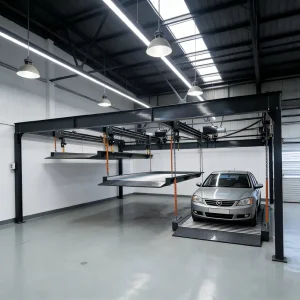
Designed for compact spaces like basements, this tilting system uses an angled platform to optimize overhead clearance. Offering adjustable lift heights from 1,400mm to 1,800mm and a load capacity of 2,000kg, it provides reliable car storage where standard vertical lifts cannot fit.
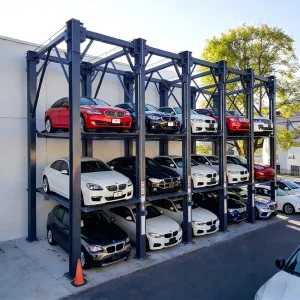
Designed to store up to four vehicles vertically, this four-post mechanical stacker is built for heavy-duty commercial storage. Able to accommodate both sedans and SUVs, it can also be configured as a three-level system to suit specific vertical clearance limits.
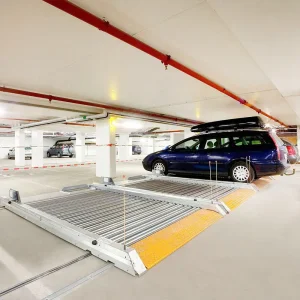
This underground double-deck lift is tailored to match specific pit dimensions, hiding cars below ground level to preserve surface aesthetics. Highly popular for modern architectural residences and properties with strict height limits, it stores vehicles out of sight without compromising yard layouts.
This design functions as both a freight elevator and a car lift, providing flexible floor-to-floor logistics. Its construction does not require a deep pit, simplifying installation in existing commercial auto showrooms, distribution centers, and industrial workshops.
An automated parking solution configured from 2 to 6 levels, this system uses vertical lifts and sliding platforms to stack vehicles efficiently. It can be customized for indoor or outdoor setups to maximize vehicle storage capacity on limited ground plots.
Our parking systems are operating globally across the USA, Italy, France, Germany, Spain, and Australia. To ensure long-lasting performance in various climates, we offer customizable surface protection options, including hot-dip galvanizing and industrial-grade powder coating.
Our high-efficiency powder coating setups emit minimal volatile organic compounds (VOCs) and feature recovery systems that achieve nearly 100% material utilization. They ensure a durable, consistent finish on metallic components, protecting them from weathering and abrasion.
We provide water purification equipment, including reverse osmosis (RO) desalination and wastewater treatment units, helping businesses recycle water, reduce disposal costs, and comply with environmental regulations.
Technical guidance on safety compliance, structural requirements, and integration of automotive elevators.
CE certification indicates compliance with European Union safety directives, including the Machinery Directive 2006/42/EC and EN 1493 standards. It verifies that the elevator design, structural load capacity, and safety devices meet recognized global engineering standards, ensuring safety during daily dealership operations.
EVs are significantly heavier than traditional internal combustion vehicles due to their large battery packs. This requires elevators with higher load ratings (typically 3,000kg to 5,000kg), reinforced structural steel platforms to handle localized axle weight, and robust hydraulic lift cylinders.
Yes. While underground scissor lifts require a structured concrete pit to sit flush with the floor, our double-rail guide and certain four-post systems can be installed directly on flat concrete surfaces, requiring only a small access ramp for vehicle entry.
We integrate several safety layers: automatic mechanical safety locks that prevent accidental descent, hydraulic burst protection valves to lock pressure in case of line failures, photo-eye sensors to stop travel if an obstruction is detected, and emergency stop controls.
Yes. Because dealership configurations and architectural layouts vary, our engineering team designs platforms, overall lift heights, and weight ratings to match the specific dimensions and load profiles of your building plans.
Outdoor equipment is protected using industrial powder coating or hot-dip galvanizing, which provides long-lasting resistance against rain, moisture, road salt, and temperature changes to prevent rust and degradation.
By angling the upper platform, the Tilting Parking Lift allows a second vehicle to be parked underneath even in rooms with low ceilings. This is a practical choice for basements, low garages, and height-restricted showrooms.
Standard configurations run on industrial 3-phase power (typically 380V/400V, 50Hz/60Hz) to ensure efficient hydraulic pump operation. Systems are controlled via PLC interfaces, featuring push-button control boxes or key switches, with options for remote integration.
Discover our specialized machinery, finishing equipment, and environmental management systems.
 Cherish