 Cherish

The Strategic Blueprint for Vertical Car Storage
An analytical evaluation of engineering specifications, compliance frameworks, and global structural applications.
1. The Macro-Industrial Shift Toward Vertical Footprint Minimization
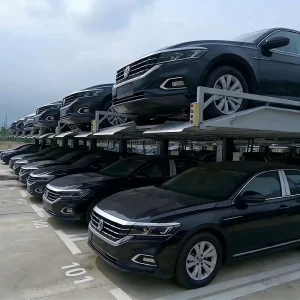
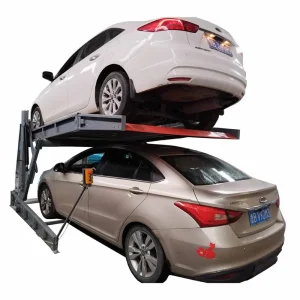
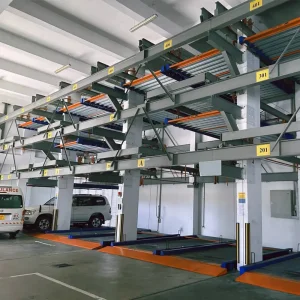
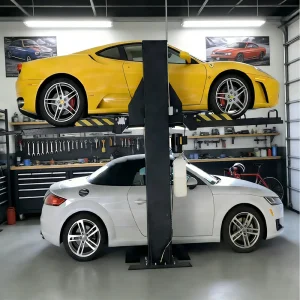
In contemporary civil engineering and urban development, space is a primary capital asset. The global rise in metropolitan vehicle density, paired with soaring land costs, has forced a critical paradigm shift: parking logistics must evolve vertically. Traditional multi-post vertical lifts, while functional, demand substantial horizontal clear space and structural footings. Herein lies the engineering supremacy of the Single Post Car Storage Lift. By consolidating structural loads onto a single vertical column, these systems yield unmatched space efficiency, permitting installation in constrained layouts where multi-column configurations fail.
From commercial fleet storage yards to subterranean residential developments, utilizing a single-post structural layout frees up critical drive-through and access lanes. This efficiency optimizes operational traffic patterns. Additionally, because the single post structure requires anchors on only one side, it drastically reduces site preparation and concrete excavation, providing developer-focused cost benefits during construction.
Optimized Driveway Clearance
Enables wider access paths, decreasing vehicle collision risks during parking and retrieval operations in restricted configurations.
Subterranean Optimization
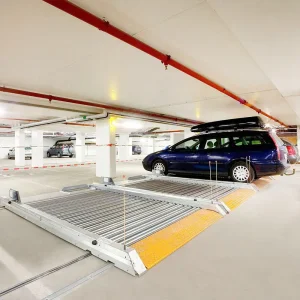
Maximizes low clearance parameters in basements and structural envelopes where supporting pillars cannot be placed.
Reduced Concrete Footprint
Concentrated mechanical loads reduce the foundation footprint, allowing installations near property lines and structural load walls.
2. Technical Specifications & Structural Durability of Cherish Systems
Qingdao Cherish's single-post design is built on a foundation of structural integrity and materials science. Constructed from high-tensile Q345B structural steel, our column configurations are engineered to resist high bending moments and torsional stresses. Standard single-post models support capacities up to 2500kg, easily accommodating heavy sedans, classic cars, and modern electric vehicles (EVs), which present higher curb weights due to battery packs.
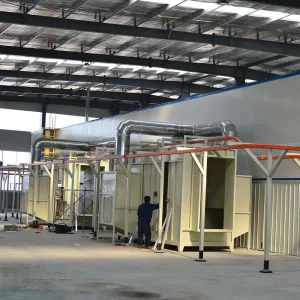
Our manufacturing workflow leverages automated CNC fiber laser cutting and robotic welding systems to ensure precise fitment and strong joints. Each carriage is guided along the main mast via self-lubricating, wear-resistant high-density polyethylene (HDPE) sliding pads. These pads minimize friction, lower energy draw during operation, and virtually eliminate mechanical binding, ensuring smooth vertical transitions.
3. Understanding the Import of CE Certification (EN 1493 Compliance)
In the automated storage sector, safety compliance is paramount. Our vehicle lifts undergo rigorous testing to achieve CE Certification under the EN 1493 Standard (specifically covering mobile or stationary automotive lifts). Compliance validates structural engineering math, weld integrity, and hydraulic fail-safes.
Key safety components integrated into our systems include:
- Mechanical Locking Mechanisms: Auto-engaging safety locks secure the platform at pre-set heights, isolating structural loads from the hydraulic system.
- Hydraulic Parachute Valves: Velocity-sensing valves instantly seal the hydraulic line in the event of hose rupture, preventing uncontrolled platform descent.
- 24V Control Enclosure: Step-down transformers protect system operators from high-voltage shocks during standard operation.
- Limit Switches: Automated top-level optical or mechanical sensors cut power to the hydraulic power pack once optimal stroke is reached, preventing mechanical over-travel.