High-Quality Horizontal Powder Coating Line Manufacturer & Factories

Precision Engineering, Global Quality Compliance, and Sustainable Industrial Finishing Solutions

100+
Countries & Regions Served
20,000+ ㎡
Modern Production Facilities
15+
Years International Trade Experience

1. Industrial Significance & Global Status of Horizontal Powder Coating Lines

In modern manufacturing ecosystems, surface finishing is no longer merely a cosmetic process. It has evolved into a key element of component durability, lifespan extension, and environmental responsibility. Horizontal powder coating lines represent the apex of automated surface coating technology, serving as the benchmark for processing structural metals, extrusion profiles, and sheet metal parts.

Unlike vertical arrangements which prioritize high-speed, uniform extrusion coating within a tiny plant footprint, horizontal setups offer unmatched operational versatility. Manufacturers globally favor horizontal coating lines due to their capability to handle deep, complex 3D structures, heavy castings, variable-length architectural aluminum profiles, and components with intricate interior cavities. The global commercial market for horizontal coating systems has expanded rapidly. Industrial hubs across North America, Western Europe, and East Asia are heavily investing in these systems to align with stringent ESG (Environmental, Social, and Governance) mandates. Liquid coating, once standard, faces mounting regulatory pushback due to the emission of Volatile Organic Compounds (VOCs). Horizontal electrostatic powder coating lines produce zero VOCs, offer up to 99% material utilization via recovery cyclones, and deliver superior edge coverage, resolving traditional concerns about corrosion and uneven finish.

2. Technical Blueprint: Pre-Treatment, Electrostatics, and Thermal Polymerization

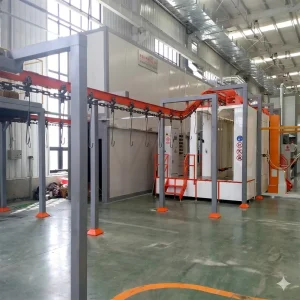
A premium horizontal powder coating line is a complex integration of mechanical, chemical, and thermal systems. Every stage is highly optimized to ensure maximum adhesion and zero surface defects:

  • Multi-Stage Chemical Pre-Treatment: The foundation of any durable finish is the surface preparation. Our industrial lines integrate automatic spray or immersion tunnels employing degreasing, acid pickling or alkaline cleaning, followed by advanced zirconium or zinc-phosphating conversion coatings. Zirconium-based chemistry has largely replaced traditional chrome-heavy chemical lines due to its lower environmental toxicity and excellent cross-linking compatibility with organic powders.
  • Conveyorized Transport Systems: The mechanical backbone utilizes overhead monorail systems or heavy-duty Power & Free conveyors. These automated tracks move parts continuously or in indexing cycles through the coating process, maintaining a vibration-free feed to eliminate wet-powder dust dropoff.
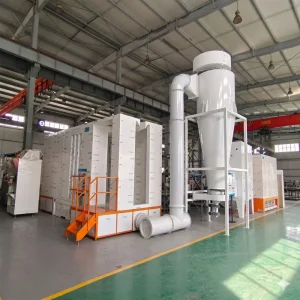
  • Electrostatic Deposition Booth: Features advanced automatic powder spray guns equipped with Corona or Tribo charging systems. Inside the booth, automated reciprocators control the gun movement to ensure consistent mil thickness across all surfaces. High-efficiency cyclone recovery systems separate usable powder from air, feeding the recycled powder back to the fluidizing hopper.
  • Precision Curing Drying Ovens: Curing represents the polymerization of the resin. Our drying ovens utilize indirect gas-fired heating or electric infrared (IR) preheating zones. By maintaining a highly stable temperature profile within ±2.5°C across the heating chamber, we prevent issues like orange peel, under-curing, or color shifting.

"By utilizing advanced horizontal logistics, custom pre-treatment, and high-efficiency electrostatic systems, manufacturing plants can expect up to 35% reduction in energy overheads and up to 99% powder recovery rates when compared to legacy wet paint plants."

3. Industrial Synergy: Materials Engineering Meets Space Optimization

Qingdao Cherish operates at the intersection of heavy structural metal fabrication and advanced automation controls. Our organizational layout consists of two specialized divisions that work in synergy to share material knowledge, quality control baselines, and control engineering logic.

Industrial Equipment Division

This division engineers specialized industrial solutions: automated horizontal powder coating lines, conveyor systems, electrostatic ovens, and environmental wastewater plants. Focus centers on material lifespan, corrosion resistance (ISO 12944 standard compliance), and plant energy balance.

Parking Systems Division

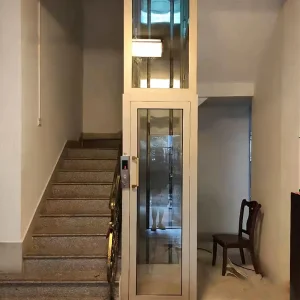
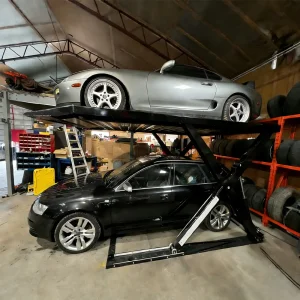
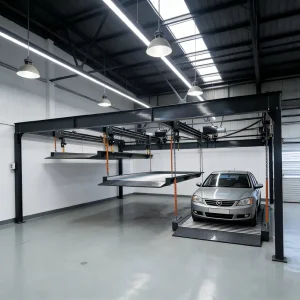
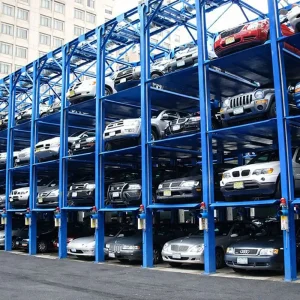
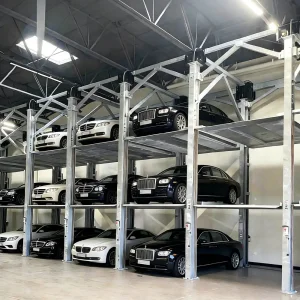
Focuses on space-saving car parking lifts, scissor car stackers, pit parking platforms, and complex puzzle parking matrices. These products require heavy structural steel design, smart PLC automation logic, and high-performance powder finishes to resist environmental weathering.

Shared Engineering Excellence

By using in-house coating lines developed by the Industrial Division, all structural parking equipment components receive premium dual-layer powder protection. This integrated control cycle ensures that parking lifts, platforms, and mechanical structures maintain high rust resistance and physical structural integrity over decades.

4. Technical Roadmap: The Evolution of Smart Curing & Coating Systems

The development of horizontal powder coating technology is shifting towards smart operations, energy conservation, and micro-precision tracking. Over the next decade, three key areas will redefine how industrial powder coating factories operate globally:

I. Industry 4.0 & Closed-Loop AI Controls

Modern lines are transitioning to real-time film thickness monitoring. Non-contact laser sensors measure the applied powder thickness before the parts enter the curing oven. This data is fed back to the PLC system to dynamically adjust gun voltage, powder flow rate, and conveyor speed. This minimizes human error and reduces reject rates to below 0.1%.

II. Fast Color-Change Cyclone Booths

For contract coaters, time is resource. Modern powder booths are constructed using non-conductive plastic panels that prevent powder buildup on the booth walls. Paired with high-efficiency multi-cyclones, the system cleans itself and shifts color programs within 10 to 15 minutes, preserving high throughput rates.

III. Hybrid and Clean-Energy Polymerization

With carbon neutrality goals fast approaching, curing ovens are utilizing green hydrogen burners, heat pump recovery loops, and specialized low-bake powder chemistry. Low-cure powders cross-link at 160°C instead of the typical 200°C, lowering gas consumption by 20% to 25% while maintaining the mechanical hardness of the cured film.

5. Macro Environmental Solutions: Wastewater Treatment & Zero Liquid Discharge (ZLD)

A modern industrial manufacturing plant cannot look at its processes in isolation. The chemical pre-treatment stages of powder coating lines generate rinse wastewater containing heavy metals, phosphorus, and organic oils.

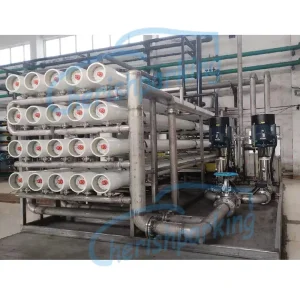
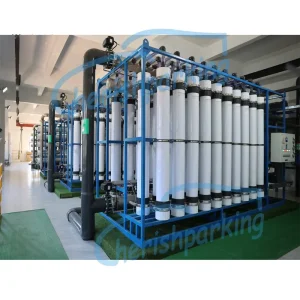
Qingdao Cherish integrates specialized Wastewater Treatment Systems directly within our industrial installations. By combining Ultrafiltration (UF) water reclamation processes with full-membrane Reverse Osmosis (RO) desalination systems, we recycle up to 98% of the chemical rinse water back into the pre-treatment tunnel. This closed-loop water management system achieves Zero Liquid Discharge (ZLD), allowing factories to comply with strict municipal environmental audits. This integrated engineering approach bridges the gap between mechanical output and sustainable industrial manufacturing.

6. Regional Case Studies and Application Profiles

Our machinery and structural solutions are customized to perform across diverse geographical environments:

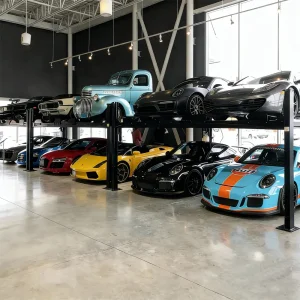
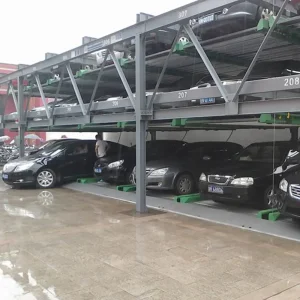
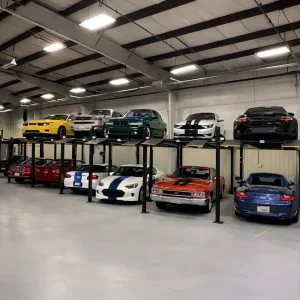
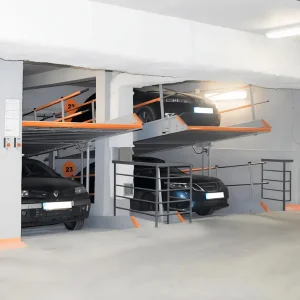
  • North America (US & Mexico): Large-scale industrial and heavy-duty logistics projects. Double-level four-post parking systems and heavy triple stackers are deployed in logistics hubs. These systems use our high-durability electrostatic powder coatings to withstand continuous exposure to moisture, salt, and grease.
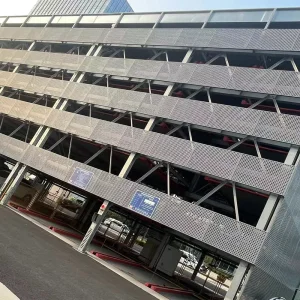
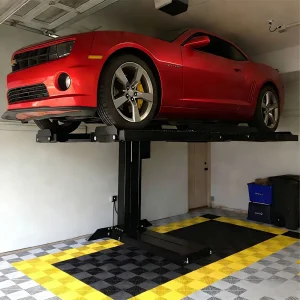
  • Western Europe (France, Germany, UK): Focused on space optimization and carbon footprint reduction. Projects in these countries utilize multi-level motor-driven automatic puzzle parking systems and customized home garage vehicle stackers. These units are coated using energy-efficient horizontal coating lines that meet local European emission standards.
  • Australia: Demands high corrosion-resistance because of coastal marine environments. Our underground scissor lifts with double decks for villa yards are hot-dip galvanized and finished with double-layer polyester powder to resist marine salt sprays.

Expert Engineering FAQ

Direct technical answers from our engineering directors regarding layout, parameters, chemistry, and system integrations.

Q1: What are the main differences in material utilization between a horizontal powder coating line and standard liquid paint application?
A1: Liquid spray painting processes typically experience paint loss through overspray, resulting in material utilization rates of only 40% to 60%. A modern horizontal powder coating line utilizing electrostatic guns and dynamic recovery cyclones collects overspray powder, filters it, and recirculates it to the hopper. This achieves material utilization rates of 95% to 99%. In addition, it completely avoids the use of volatile solvents, reducing the need for expensive hazardous waste treatment systems.
Q2: How does pre-treatment chemistry affect the corrosion resistance rating of coated products like parking lifts?
A2: Pre-treatment creates the interface between the raw steel and the polymer coat. Applying powder directly to untreated steel can lead to early oxidation under the film, causing paint peeling. Utilizing multi-stage conversion coatings (such as zinc phosphate or zirconium conversion coatings) creates a micro-crystalline layer that anchors the powder. This chemical anchor allows our double-level parking lifts and single-column stackers to achieve up to 1000+ hours in salt spray testing, matching ISO C4 or C5-I corrosion class standards.
Q3: What thermal parameters must be maintained in the curing oven to guarantee structural paint hardness?
A3: The curing profile requires holding the metal substrate temperature at 180°C to 200°C for 10 to 20 minutes (depending on powder manufacturer specifications). If the temperature is uneven, the powder will not polymerize fully, leaving the coat brittle or under-cured. Our ovens utilize indirect heating with recirculation fans to keep the temperature distribution delta within ±2.5°C, ensuring uniform impact resistance and coating gloss.
Q4: Can a vertical line replace a horizontal coating line for heavy metal components?
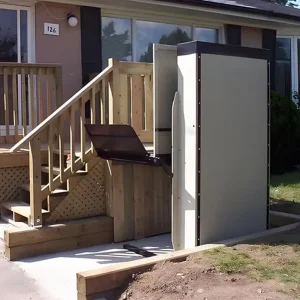
A4: Vertical powder coating lines are designed for high-volume, standardized aluminum extrusions. However, they struggle with heavy castings, structural steel frames, and asymmetrical weldments due to gravity-induced load limitations and conveyor balancing issues. Horizontal coating lines are the industry standard for processing heavy structures, such as car stacker platforms, structural steel beams, and home lift columns, because they support higher weight capacities and allow for manual touch-up angles.
Q5: How do RO and UF systems integrate with industrial finishing lines?
A5: Chemical pre-treatment lines require pure water for the final rinses to prevent mineral deposits from staining the metal before coating. Reverse Osmosis (RO) plants remove dissolved solids from the feed water. Ultrafiltration (UF) systems treat the degreasing and cleaning wash tanks by removing suspended solids and oil emulsions. Together, these systems keep water consumption low and extend the lifespan of the pre-treatment baths.