Explore our premium machinery engineering products distributed worldwide, certified to meet international criteria.
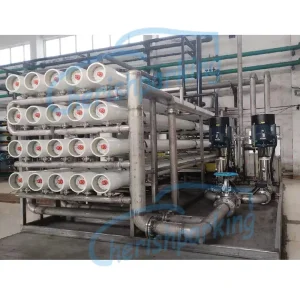
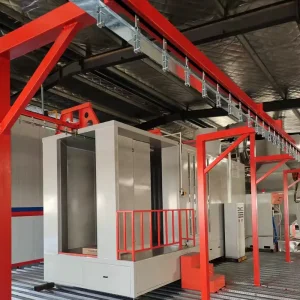
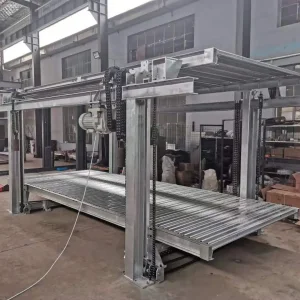
Qingdao Cherish is an integrated industry and trade enterprise dedicated to the design, manufacture, and global supply of intelligent parking equipment and industrial processing solutions. With strong engineering capabilities, modern manufacturing resources, and extensive international project experience, we deliver reliable systems that support modern urban infrastructure and industrial development worldwide.
Founded by a team of experienced engineers and international business professionals, the company was established with a clear mission: to provide efficient, durable, and sustainable equipment solutions through continuous innovation, precision manufacturing, and customer-focused service. From initial concept design and technical planning to production, delivery, and after-sales support, we ensure consistent quality and dependable performance throughout every project lifecycle.
Today, our business operates through two specialized divisions to better serve diverse market needs and provide focused expertise across different industries.
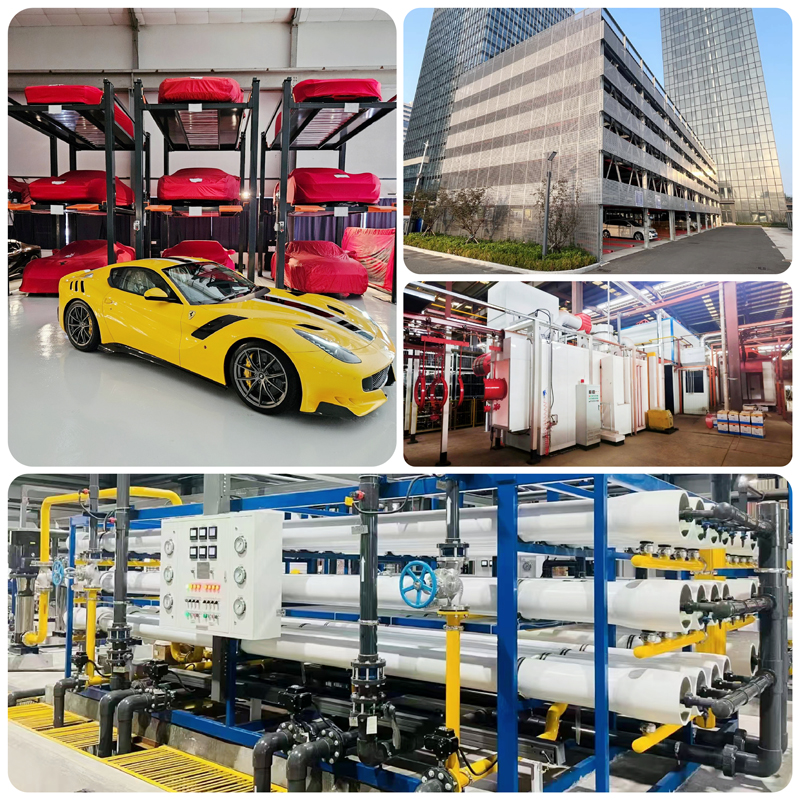
An in-depth review of technological innovations, regulatory landscapes, and standardizing small sewage treatment plants (STPs).
In modern environmental engineering, wastewater treatment paradigms are undergoing a significant shift. For decades, massive, centralized municipal treatment facilities were seen as the definitive answer. However, high capital investments, expensive pipeline maintenance, and topography constraints have exposed the limitations of centralization. The transition to decentralized wastewater treatment systems has emerged as a resilient, cost-effective, and highly adaptable option.
Small sewage treatment plants (STPs), typically processing between 5 to 500 cubic meters per day, serve as the backbone of decentralized infrastructure. They offer a versatile, localized method to treat domestic sewage to compliant levels right at the source. This eliminates the requirement for miles of sewer piping, reduces energy requirements for pumping, and facilitates direct local water reuse for landscaping, agriculture, or industrial processing.
For municipal buyers and environmental engineers, a high-quality small sewage treatment plant is defined not just by raw processing volume, but by its stability index under peak hydraulic loading, its biological nutrient removal (BNR) efficiency, and its operational autonomy. Advanced designs utilize a combination of mechanical filtration, biological fixed-film processing, and membrane separation to achieve superior effluent quality while maintaining a compact physical footprint.
Designing small sewage treatment plants introduces unique engineering constraints. Unlike large municipal facilities that benefit from the averaging effect of large tributary populations, small STPs face extreme fluctuations in hydraulic loads (flow velocity peaks during morning and evening hours) and organic loads (sudden changes in chemical oxygen demand, COD, and biological oxygen demand, BOD5). An effective system must incorporate reliable equalization zones, robust biological processes that can survive starvation periods, and autonomous controls capable of self-regulation without the constant presence of onsite operators.
Qingdao Cherish operates through specialized divisions to optimize manufacturing and deliver tailored equipment globally.
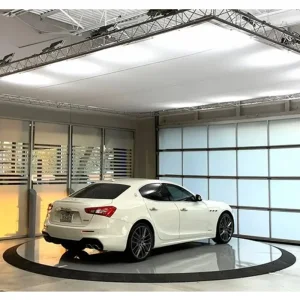
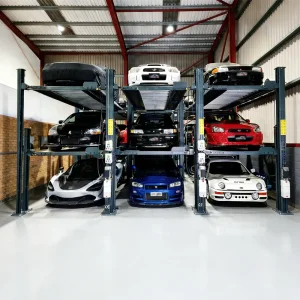
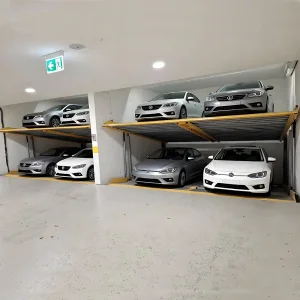
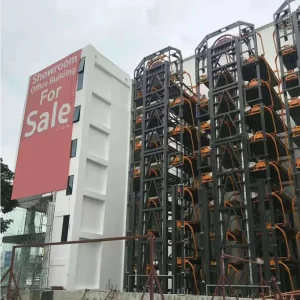
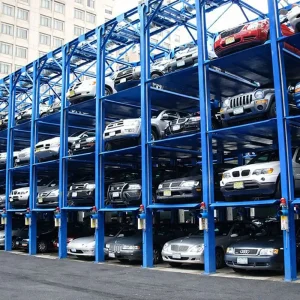
Focuses on the development and production of car parking lifts, automated parking systems, car stackers, and customized parking solutions. Designed to maximize space utilization and operational efficiency, our systems are widely applied in residential buildings, commercial facilities, hospitals, and urban developments. Through continuous engineering innovation and strict quality control, we deliver safe, reliable, and space-saving parking solutions tailored to global project requirements.
Our Industrial Equipment Division provides advanced powder coating lines and sewage treatment plant solutions for industrial applications. These systems are engineered to improve production efficiency, surface finishing quality, and environmental sustainability. By integrating automation technology with durable system design, we help clients optimize manufacturing processes while meeting modern environmental standards and regulatory requirements.
We leverage our cross-disciplinary expertise to merge mechanical steel fabrications (such as our high-strength parking lifts) with automated fluid dynamics systems (such as containerized STPs). This enables us to provide turnkey solutions for multi-level green buildings, modular mining camps, and infrastructure projects, combining mechanical structural integrity with advanced environmental systems.
Understanding the engineering design behind efficient sewage degradation in low-footprint environments.
MBBR technology utilizes thousands of polyethylene biofilm carriers operating in mixed motion within an aerated wastewater treatment basin. The suspended bio-carriers increase the internal surface area for biomass growth, dramatically raising the volumetric treatment capacity of the STP. This system is highly resilient to toxic shock loads and variations in pH, making it perfect for small commercial installations.
MBR combines conventional biological treatment (activated sludge) with physical membrane separation (microfiltration or ultrafiltration). This integration removes the need for secondary clarification. The resulting effluent is highly clear, free of suspended solids, and virtually pathogens-free. MBR systems are standard for small STPs where water reclamation and direct reuse are required.
The A2O process is structured specifically to target biological nutrient removal, focusing on phosphorus and nitrogen. In the anaerobic phase, phosphorus-accumulating organisms (PAOs) release phosphorus, preparing for luxury uptake in the oxic stage. In the anoxic zone, denitrification occurs, turning nitrates into nitrogen gas. Finally, nitrification takes place in the oxic tank.
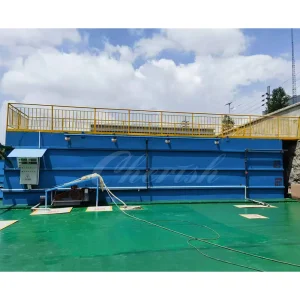
A key focus for modern environmental consultants is the integration of these processes into robust, containerized systems. Utilizing standard 20-foot or 40-foot shipping container profiles allowed engineers to pre-assemble, pre-wire, and pre-test entire plant configurations before dispatch. This modular layout significantly reduces civil construction requirements, minimizing site disruption and speeding up installation timelines in sensitive areas like eco-resorts or remote defense projects.
How Cherish bridges the gap between cost efficiency and international regulatory standards.
Deploying a small sewage treatment plant globally requires strict compliance with local regulatory frameworks. Whether meeting the European EN 12566 standards, US EPA Class I effluent quality, or strict local limits on Total Nitrogen (TN) and Ammonia-Nitrogen (NH3-N) in sensitive watersheds, systems must perform reliably.
Qingdao Cherish ensures compliance through comprehensive pre-engineering reviews of local discharge regulations. We customize the filtration and disinfection stages—incorporating UV disinfection, chlorination dosing, or tertiary sand filtration—to ensure the effluent meets the required local discharge standards.
Manufacturing in Qingdao, China, provides distinct advantages in logistics, raw materials, and production capabilities. Our proximity to major shipping terminals ensures prompt logistics, while our vertically integrated facility utilizes advanced manufacturing techniques:
For international buyers (including municipal offices, resort developers, and engineering firms), procurement involves balancing capital expenditure (CAPEX) with long-term operational costs (OPEX). A cheaper system with high maintenance demands or frequent membrane fouling will quickly become costly.
By leveraging Chinese manufacturing scale, we optimize raw production costs. This enables us to invest in premium components, such as Siemens PLC modules, Grundfos pumps, and durable membrane modules. This approach delivers a system with a low total cost of ownership (TCO) and reliable operation over a long service life.
"By standardizing our structural designs, we reduce lead times by up to 35% compared to regional fabricators, allowing fast deployment on fast-track construction schedules."
Adaptable, modular wastewater systems designed for diverse and demanding environments.
These properties often operate in environmentally sensitive areas, far from municipal sewer systems. Odorless, quiet, and highly efficient treatment is critical. Our containerized MBR plants generate clean, recycled water suitable for landscape irrigation, helping developers achieve eco-friendly credentials while saving on local water bills.
Installing large sewer networks in rural areas can be cost-prohibitive. Small sewage treatment plants offer an effective decentralized solution. Serving groups of 50 to 500 households, they treat local wastewater efficiently and discharge it safely into nearby streams, preserving the health of local ecosystems.
Temporary worker accommodations, mining outposts, and remote drilling installations generate high-strength domestic waste. Our robust, containerized sewage units can be rapidly deployed, easily decommissioned, and transported to the next job site, ensuring continuous environmental compliance across projects.
Clear, direct answers to key technical and operational questions regarding small sewage treatment plants.
A typical containerized small sewage plant has an operational lifespan of 15 to 25 years, provided the structural shell is treated with heavy-duty anti-corrosive coatings. Core mechanical components such as aeration blowers, submersible pumps, and control valves usually require servicing or replacement every 5 to 7 years. Maintenance is simple; automated PLC systems manage backwashing sequences, while remote telemetry alerts operators to pressure changes or pump faults, allowing for timely off-site support.
Small systems are prone to variations in organic loads. To address this, our systems feature integrated equalization tanks with progressive feed pumps. This buffers peak flows, providing a consistent organic loading to the bio-reactor. By utilizing MBBR technology, biological media carriers maintain a robust, fixed biofilm that is significantly more resilient to shock loads compared to conventional suspended activated sludge.
Yes. When utilizing an MBR (Membrane Bioreactor) process combined with tertiary UV disinfection, the treated water meets strict local reuse criteria. Suspended solids (SS) are reduced below detection limits, and turbidity drops below 1 NTU. This water is suitable for garden irrigation, dust suppression, cooling towers, and toilet flushing, reducing fresh water demands.
All systems are designed to fit within standard container formats, complying with ISO shipping regulations for smooth sea transport. Control panels, pumps, and blowers are tailored during the engineering phase to match the client's local electrical standards (e.g., 380V/50Hz/3Phase, 460V/60Hz/3Phase, or single-phase variants), ensuring simple plug-and-play installation on site.
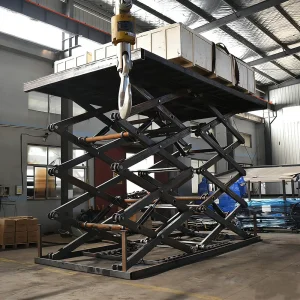
In modern urban planning, space is at a premium. By combining our underground mechanical parking structures (such as pit car lifts and scissor elevator systems) with localized, underground modular water treatment systems, developers can maximize utilization of sub-surface space. This integrated approach allows properties to address both parking demands and environmental management within the same footprint.
Browse our complete range of certified parking systems, coat processing lines, and sewage plant components.

 Cherish