Engineered to comply with rigorous international safety standards (CE, ISO, ASME), our heavy-load lifting solutions maximize vertical space for residential, commercial, and industrial facilities.
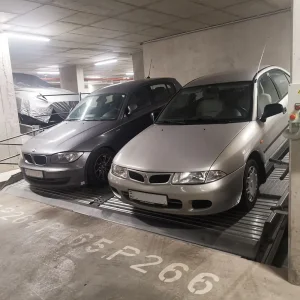
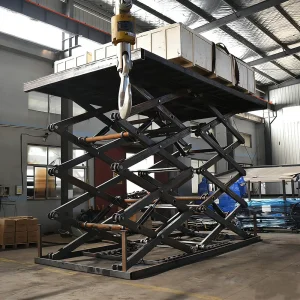
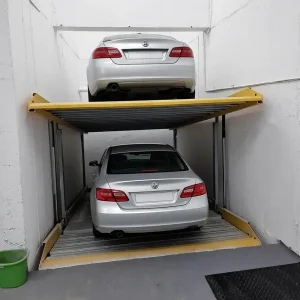
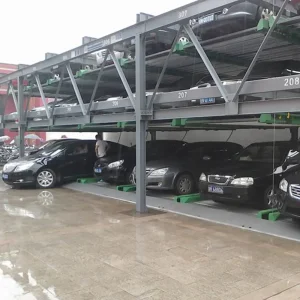
Rapid global urbanization and soaring real estate values in metropolitan hubs—from New York, London, and Tokyo to Dubai and Singapore—have created unprecedented spatial challenges for commercial property developers, automotive logistics managers, and luxury residential architects. Modern urban planning mandates maximum land-use efficiency. Traditional circular or linear concrete drive-in ramps inside multi-story parking garages consume up to 30% to 40% of total usable floor area. This spatial inefficiency represents millions of dollars in lost rentable square footage or unbuilt commercial volume.
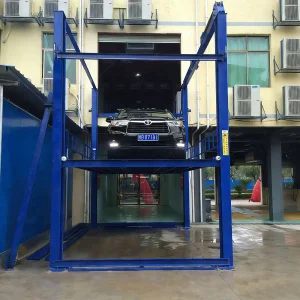
Consequently, high-capacity parking garage car elevators and automated vehicle transport platforms have evolved from niche architectural luxuries into essential structural assets. Unlike standard passenger elevators, car elevators demand massive payload resilience (ranging from 3,000 kg to over 10,000 kg), oversized cabin dimensions, exact leveling accuracy under dynamic tire movement, and continuous duty-cycle capabilities to manage peak flow traffic in high-density facilities.
By replacing concrete access ramps with vertical car lifts, developers reclaim hundreds of square meters, allowing extra parking bays or rentable commercial space per floor level.
Modern Electric Vehicles (EVs) are 25-40% heavier than ICE vehicles due to battery packs. Modern car lifts are engineered with high structural safety margins (SF 5:1) to handle heavy SUV and EV loads effortlessly.
Integration with Programmable Logic Controllers (PLC), RFID access, automatic doors, and Smart Building Management Systems (BMS) ensures frictionless vehicle transit.
Qingdao Cherish Industrial & Trade Enterprise stands as a premier global OEM/ODM manufacturer specializing in intelligent parking systems and heavy industrial processing machinery. Operating through dual specialized engineering divisions—the Parking Systems Division and the Industrial Equipment Division—the enterprise delivers end-to-end turn-key solutions spanning initial structural CAD modeling, FEA stress simulation, precision manufacturing, global shipping, and technical installation oversight.
Manufacturing in China provides a decisive strategic edge for global real estate developers and general contractors. By leveraging Qingdao’s robust industrial supply chain, advanced robotic laser-welding clusters, automated powder-coating lines, and direct maritime logistics access via Qingdao Port, Cherish provides heavy-duty car elevators at a fraction of Western production costs without compromising structural integrity or electrical safety compliance.
| Technical Parameter | Hydraulic Drive Car Elevators | Traction Guide Rail Car Elevators | Scissor Mechanism Car Elevators |
|---|---|---|---|
| Optimal Vertical Rise | Up to 15 Meters (2-4 Floors) | Up to 100+ Meters (High-Rise) | Up to 10 Meters (Basement / Pit) |
| Load Capacity Range | 3,000 kg – 6,000 kg | 3,000 kg – 10,000 kg | 2,000 kg – 5,000 kg |
| Drive & Power System | Hydraulic Pump + Chain / Cylinder | Geared / Gearless VVVF Traction | Heavy Duty Hydraulic Scissor Arms |
| Pit Depth Requirement | Shallow Pit (300mm - 500mm) | Standard Pit (1200mm - 1500mm) | Requires Deep Structural Pit |
| Maintenance Profile | Low maintenance, accessible valves | Medium, requires overhead machine room | Low-Medium, grease points on joints |
| Primary Application | Villas, Commercial Basements | Tower Garages, Logistics Hubs | Showroom Display, Underground Pits |
Our car elevators and parking lifts are tailor-engineered to solve precise spatial constraints across distinct architectural frameworks worldwide.
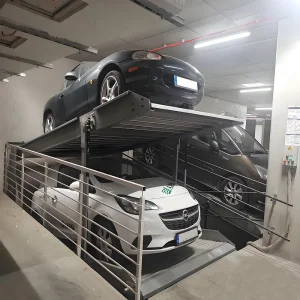
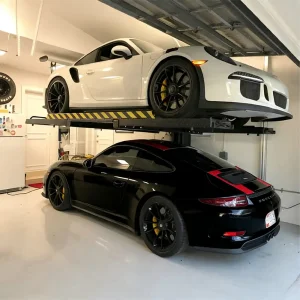
In high-density luxury residential zones (e.g., California, Sydney, Southern Europe, Middle East), homeowners seek to store multi-car collections without disrupting landscape aesthetics. Invisible double-deck scissor lifts and pit-type hydraulic car elevators allow vehicles to be driven onto a ground-level platform and submerged seamlessly underground, keeping the upper lawn or driveway pristine.
Automobile dealerships in urban centers must display dozens of sedans and heavy SUVs across multi-level facilities. Scissor car elevators and hydraulic guide-rail lifts allow rapid, safe movement of inventory between baseline storage, roof decks, and second-floor mezzanine display floors, operating without dedicated access ramps.
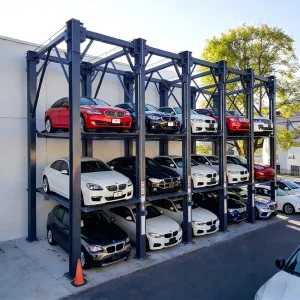
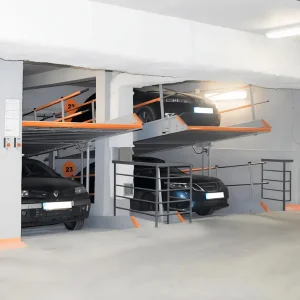
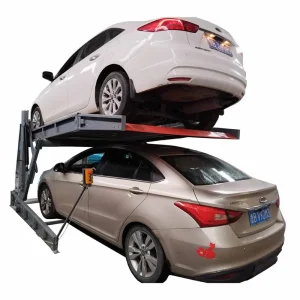
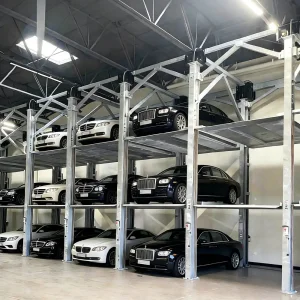
High-traffic commercial garages integrate automated multi-level puzzle parking systems (2-6 levels) and high-speed vertical car hoists. Equipped with photoelectric safety barriers, optical sensors, emergency anti-fall drop locks, and PLC touch-screen operating panels, these systems minimize vehicle retrieval times to under 90 seconds.
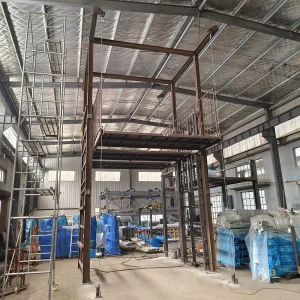
Dual-rail cargo and car elevators serve double duty in multi-story manufacturing complexes and logistical sorting centers. Designed with heavy steel platforms and reinforced structural channels, these lifts transport heavy freight forklifts, commercial vans, and pallet loads between production floors seamlessly.
The global vehicle lifting and mechanical parking industry is undergoing a structural technological transition driven by smart urban digitization, electrification, and green building certifications (LEED/BREEAM). Purchasing directors and lead architects must account for five pivotal industry trends during project specification:
Modern car elevators incorporate IoT sensors monitoring hydraulic fluid pressure, motor temperature, chain tension variance, and door cycle metrics. Cloud telemetry alerts maintenance teams before component fatigue causes downtime.
With electric vehicle adoption surging globally, smart parking stackers and car elevators are increasingly fitted with integrated dynamic cable-track power lines. This allows vehicles to recharge safely while resting on elevated stacker platforms.
Advanced VVVF gearless traction drives utilize regenerative power modules to feed potential energy generated during platform descent back into the facility’s power grid, cutting total operational power consumption by up to 30%.
Purchasing heavy vehicular lifts and automated mechanical parking systems requires strict evaluation of engineering credentials, anti-corrosion treatments, and fail-safe safety redundancies.
Car elevators installed in underground pits or semi-outdoor coastal environments face high moisture and salt exposure. Standard spray painting degrades within 2-3 years. Ensure your manufacturer provides high-grade Q355B structural steel, combined with Hot-Dip Galvanization or multi-stage Powder Coating lines for superior rust resistance.
Safety is paramount when elevating multi-ton vehicles. Verify that the elevator specification incorporates mechanical latch locks (spaced at every 100mm-150mm interval), hydraulic hose-burst safety valves, limit switches, and electromagnetic safety dog locks that engage automatically in the event of hydraulic pressure drop.
Global customs and municipal building inspectors mandate strict adherence to international lifting guidelines. Ensure equipment holds genuine CE certification, complies with EN 81-41 / EN 14010 machinery safety directives, ISO 9001 quality system credentials, and optional ASME A17.1 elevator safety codes.
Evaluate long-term operational costs beyond initial purchase price. Standardized hydraulic components (e.g., Siemens motors, Schneider electrics, Bucher hydraulics) ensure spare parts are readily available locally, minimizing potential downtime and field repair expenses.
Answers to common structural, technical, and logistical questions regarding car elevators and automated parking systems.
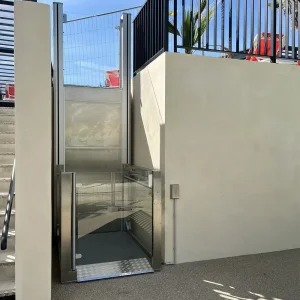
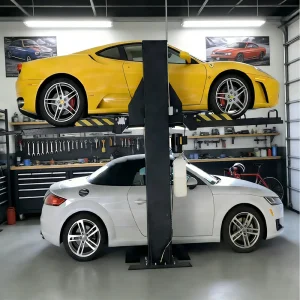
Explore our extended technical range of floor-to-floor transfer hoists, wheelchair platforms, and customizable garage stackers.
 Cherish